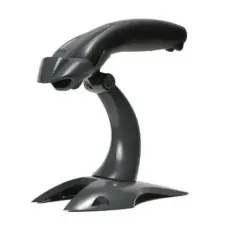
Honeywell Xenon MS 1900 2D Barcode Scanner
৳16,000 ৳16,500
Showing 1 to 7 of 7 (1 Pages)
৳16,000 ৳16,500
৳11,000 ৳11,500
৳8,000 ৳9,000

৳20,000 ৳22,000
৳11,500 ৳12,000
৳5,800 ৳7,500
Honeywell is a globally recognised technology and industrial solutions brand with a particularly strong presence in barcode scanning, mobile computers, thermal printing, RFID, sensing, industrial automation, safety and productivity solutions. Honeywell products are widely suited to businesses that need dependable data collection, inventory management, labelling, warehouse operations, retail checkout, manufacturing and industrial workflows. Its current portfolio includes barcode scanners, mobile computers, printers, RFID solutions, sensors, process-control equipment, gas detection and workplace safety products.
For customers of Unix Network, Honeywell is especially relevant when looking for professional barcode scanners, barcode label printers, mobile computers, RFID equipment or business automation hardware. These products are generally more business-oriented than ordinary consumer computer accessories, so the correct model should be selected according to the application, workload, barcode type, connectivity, operating environment and software compatibility.
Honeywell product prices in Bangladesh vary significantly depending on the product category, model, scanning technology, connectivity, durability and intended business application. Basic handheld barcode scanners are generally more affordable than rugged wireless scanners, industrial printers and enterprise mobile computers. Current Bangladesh listings show Honeywell barcode scanners ranging from entry-level handheld models to more advanced 1D/2D and wireless solutions.
| Honeywell Product Category | Main Use | Typical Price Level |
|---|---|---|
| Honeywell 1D Barcode Scanner | Retail and basic barcode scanning | Budget to mid-range |
| Honeywell 2D Barcode Scanner | QR codes and modern 1D/2D barcodes | Mid-range |
| Honeywell Wireless Barcode Scanner | Retail counters and mobile scanning | Mid-range to premium |
| Honeywell Industrial Barcode Scanner | Warehouse and manufacturing | Premium |
| Honeywell Mobile Computer | Warehouse and field operations | Premium |
| Honeywell Barcode Printer | Labels, tags and receipts | Mid-range to premium |
| Honeywell Industrial Label Printer | High-volume commercial printing | Premium |
| Honeywell Desktop Label Printer | Small and medium-volume labelling | Mid-range |
| Honeywell RFID Reader | Inventory and asset tracking | Professional |
| Honeywell RFID Printer | RFID label printing and encoding | Professional |
| Honeywell Scanner Accessories | Stands, cables and accessories | Budget to mid-range |
Honeywell barcode scanners are among the brand's best-known products for retail, healthcare, warehousing, logistics and manufacturing. Honeywell describes its barcode readers as purpose-built for applications ranging from retail checkout and healthcare to warehouse supply chains and manufacturing.
A barcode scanner can significantly reduce manual data-entry work. Instead of typing a product code into a POS or inventory system, the operator can scan the barcode and send the information directly to the connected computer or business application.
A 1D barcode scanner is suitable for businesses that primarily use traditional linear barcodes. These scanners can be a practical choice for retail shops, small warehouses, libraries, pharmacies and inventory counters where QR codes or two-dimensional barcodes are not a major requirement.
Before buying a 1D scanner, check the barcode types used by your existing POS or inventory system. If your business may introduce QR codes or 2D labels later, purchasing a 2D scanner from the beginning can provide greater flexibility.
2D scanners can read traditional 1D barcodes as well as many two-dimensional codes such as QR codes, depending on the model. They are particularly useful for modern retail, ticketing, healthcare, logistics and applications where information is stored in a two-dimensional barcode.
For a new POS system, a 2D scanner is often worth considering because it provides broader barcode compatibility than a basic laser-only 1D scanner.
Handheld scanners are useful when an operator needs to move the scanner between products. They are commonly used at retail counters, warehouses, stock rooms, pharmacies and small businesses.
When selecting a handheld scanner, consider scanning distance, barcode quality, connection type, scanning speed, stand availability and expected daily workload.
Wireless barcode scanners provide greater freedom of movement than conventional wired models. They can be useful in warehouses, retail stores and stock rooms where products cannot conveniently be brought next to a computer.
For wireless scanning, battery capacity, charging method, wireless range and communication reliability are important. If the scanner will be used continuously throughout a working shift, battery and charging arrangements should be considered before purchase.
Industrial barcode scanners are designed for environments where ordinary office scanners may not be sufficient. Warehouses, manufacturing plants, distribution centres and logistics operations can require equipment capable of handling heavier workloads and more demanding physical conditions.
Honeywell's current industrial portfolio includes rugged scanning solutions such as Granit-series scanners designed for demanding environments.
Honeywell barcode scanners can be used with retail POS systems when the scanner's interface and barcode capability match the POS environment. A wired USB model can be convenient for a fixed checkout counter, while a wireless scanner can be more useful when staff need to scan larger or heavier products.
Before purchasing, check whether the POS software expects USB keyboard-style input, serial communication or another supported interface.
Super shops and retail stores can benefit from barcode scanning for faster checkout, product identification and inventory operations. A 2D scanner is particularly useful when products include QR codes or other two-dimensional codes.
For busy checkout counters, scanning speed and reliability are generally more important than purchasing the cheapest available scanner.
Pharmacies can use barcode scanners to reduce manual product-code entry and improve product identification. Depending on the workflow, a 2D scanner can provide additional flexibility for modern codes.
For healthcare environments, the scanner should be selected according to the required hygiene, cleaning and operational conditions.
Warehouses often need scanners that can operate for long periods and read labels from practical working distances. Wireless and rugged scanners can be useful when employees move between shelves, pallets and storage areas.
If barcodes are frequently damaged, poorly printed or located at different distances, scan performance becomes especially important.
Honeywell offers barcode label, ticket and tag printing solutions across desktop, industrial, portable and RFID applications. Its printer portfolio is designed for different workloads and operating environments rather than one universal printer type.
Barcode printers are useful for product labels, inventory labels, shipping labels, shelf identification, asset tags and other business applications where printed identification is required.
Thermal printing is widely used for barcode labels because it can provide fast and efficient printing without conventional ink cartridges. Depending on the printer and media, businesses can use direct thermal or thermal-transfer printing.
The correct technology depends on how long the label needs to remain readable, the environment where it will be used and the type of label material required.
Desktop barcode printers are suitable for businesses with relatively moderate printing requirements. They can be useful for retail shops, offices, small warehouses, e-commerce businesses and inventory departments.
Honeywell's desktop printer portfolio covers applications ranging from economical lower-volume printing to more demanding environments.
Industrial barcode printers are designed for businesses that print labels continuously or operate in demanding environments. Manufacturing, logistics, distribution centres and large warehouses may benefit from equipment designed for higher workloads.
When buying an industrial printer, consider daily label volume, label width, print resolution, connection options, media type, installation environment and maintenance requirements.
RFID printing combines label printing with RFID tag encoding. This can be useful for inventory tracking, asset management, logistics and supply-chain applications. Honeywell provides RFID readers, printers, tags and labels as part of its RFID solutions.
RFID equipment should normally be selected as part of a complete tracking system rather than as an isolated device. Reader compatibility, tag type, operating frequency, software integration and workflow requirements all matter.
Honeywell mobile computers are designed for professional data collection and field operations. They can be used in warehouses, logistics, healthcare, retail and other environments where employees need access to business information while moving around.
Honeywell's current portfolio includes purpose-built mobile computers for applications such as healthcare, distribution centres, hazardous environments and cold-storage operations.
Warehouse operations can use Honeywell scanners, mobile computers, printers, RFID equipment and software together to create a connected workflow. Employees can scan products, update inventory, print labels and access operational information without relying entirely on manual data entry.
This type of solution can be especially useful for businesses with large inventories, frequent stock movement or multiple warehouse locations.
Retail businesses can use Honeywell barcode scanners, printers, mobile computers and related technologies for checkout, stock management, shelf labelling and inventory operations. Honeywell's retail portfolio includes mobile computers, wearable technology, scanners, printers and voice-directed solutions.
E-commerce businesses can use barcode scanners and thermal label printers for order processing, product identification, inventory management and shipping labels. A small online shop may only require a desktop barcode printer and USB scanner, while a larger fulfilment operation may need wireless scanners, mobile computers and industrial printers.
Manufacturing environments can use Honeywell products for material tracking, production identification, inventory control and industrial sensing. Honeywell's wider industrial portfolio includes sensors, process instruments, control systems, barcode scanning and automation technologies.
Logistics companies can benefit from mobile computers, barcode scanners, RFID equipment and label printers. These products can help connect receiving, storage, picking, packing and dispatch operations.
For logistics applications, ruggedness, battery life, wireless connectivity and scanning performance are often more important than the lowest purchase price.
| Feature | 1D Scanner | 2D Scanner |
|---|---|---|
| Traditional linear barcodes | Yes | Yes |
| QR codes | Generally no | Yes |
| Typical cost | Lower | Higher |
| Future flexibility | Moderate | Higher |
| Suitable for modern POS environments | Depends on requirements | Often a better choice |
A wired scanner is generally easier to manage at a fixed workstation because it receives power through its connection and does not require regular battery charging. A wireless scanner is more convenient when employees need to move around.
For a small retail counter, a wired USB scanner may be sufficient. For a warehouse, wireless operation can save time because employees do not need to carry products back to a fixed computer.
Professional Honeywell products are designed for specific business environments, but durability still depends on selecting the correct product class. A desktop scanner should not automatically be expected to withstand the same conditions as a rugged industrial scanner.
For warehouses and factories, customers should select equipment according to the expected drops, dust, temperature, moisture and daily workload. Using the correct model can be more important than simply choosing a well-known brand.
Barcode printers require regular maintenance because dust, adhesive residue and worn components can affect print quality. Cleaning the printhead and platen according to the manufacturer's maintenance guidance can help maintain consistent barcode quality.
Businesses should also use suitable labels and ribbons. Poor-quality consumables can produce unreadable labels even when the printer itself is working correctly.
Small businesses do not necessarily need an expensive enterprise system. A basic 1D or 2D scanner and desktop thermal printer may be sufficient for a small retail or inventory operation.
The correct starting point is to identify the actual workflow. If employees only scan products at one checkout counter, a simple wired scanner may be enough. If staff frequently move around the shop or warehouse, a wireless solution may provide greater productivity.
Larger businesses may benefit from integrated scanning, mobile computing, printing and RFID solutions. Enterprise operations should consider device management, network infrastructure, software integration, maintenance and replacement planning in addition to hardware specifications.
Customers searching for Honeywell products in Jessore can consider Unix Network for technology and business hardware requirements. Because Honeywell products cover professional barcode and automation applications, customers should provide the exact requirement before purchasing so the appropriate product category can be identified.
If you are searching for Honeywell barcode scanners, barcode printers or business technology products in Jashore, search according to the specific requirement rather than simply searching for the brand. For example, searching for Honeywell 2D barcode scanner, Honeywell barcode printer or Honeywell wireless scanner can produce more relevant results.
Honeywell products can be relevant to businesses throughout Bangladesh, particularly in retail, logistics, manufacturing, warehousing, healthcare and e-commerce. Depending on the product, customers should confirm availability, delivery options, warranty and after-sales support before placing an order.
What is Honeywell best known for in the technology market?
Honeywell has a broad industrial portfolio, but its productivity solutions include barcode scanners, mobile computers, printers, RFID and voice-enabled workflow technologies. It also operates across sensing, industrial automation, safety and other technology areas.
Is Honeywell a good brand for barcode scanners?
Honeywell is a well-established professional barcode-scanning brand with products designed for retail, healthcare, logistics, warehousing and manufacturing applications.
Should I buy a 1D or 2D Honeywell scanner?
If you only scan conventional linear barcodes, a 1D model may be sufficient. If you need QR codes or want broader compatibility for future applications, a 2D scanner is generally the more flexible choice.
Can Honeywell scanners work with POS software?
Many Honeywell scanners are designed for integration with retail and business systems, but compatibility depends on the specific scanner, interface and software configuration. Always check the requirements of your POS system before purchase.
Which Honeywell scanner is suitable for a warehouse?
For warehouses, consider a scanner designed for the working environment, particularly if employees need wireless operation, longer scanning distances or greater physical durability.
Which Honeywell printer is suitable for a small business?
A desktop barcode printer can be a practical choice for lower-volume label printing. Larger operations may require industrial or higher-duty equipment.
Can Honeywell barcode printers print shipping labels?
Honeywell's printer portfolio includes barcode label, ticket and tag printing solutions for different applications, including logistics and other business environments.
Are Honeywell products suitable for Bangladesh businesses?
Yes. Honeywell's professional scanning, printing, RFID and mobile-computing products can be relevant to Bangladeshi retail, logistics, manufacturing, warehousing, healthcare and e-commerce businesses. The main consideration is selecting the correct model and ensuring local availability and service support.
Unix Network can be a useful option for customers looking for professional technology and business hardware in Bangladesh, including customers searching for products in Jessore and Jashore. When purchasing Honeywell equipment, customers should confirm the exact model, current price, availability, warranty and compatibility with their existing POS, inventory, ERP or warehouse system.
Honeywell is best considered when reliability, business productivity and professional data collection are more important than simply finding the lowest-cost hardware. For a retail shop, a dependable barcode scanner can speed up checkout. For a warehouse, wireless or rugged scanning can improve mobility. For an e-commerce operation, barcode printing can simplify fulfilment and inventory management. For larger organisations, Honeywell scanners, mobile computers, printers and RFID technologies can form part of a broader business workflow.
Before buying, identify exactly what you need to scan or print, determine the operating environment, check the required connectivity and software compatibility, and then select the appropriate Honeywell product. Always confirm the latest price, stock status, warranty and service availability before placing an order in Bangladesh.