
IP-COM
Showing 1 to 9 of 9 (1 Pages)
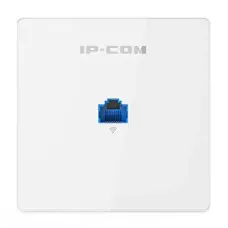

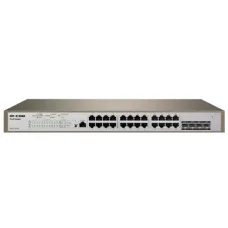
IP-COM Pro-S24-410W 24 Port Gigabit ProFi Switch
৳35,500 ৳37,500
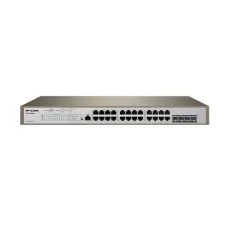




IP-COM G3310P-8-150W 8GE+2SFP Cloud Managed PoE Switch
৳9,700 ৳9,900
IP-COM is a networking technology manufacturer focused on wireless networking, enterprise connectivity, network infrastructure, surveillance networking, and related communication solutions. Its product portfolio includes enterprise routers, managed and unmanaged switches, PoE equipment, wireless access points, outdoor CPE devices, home Wi-Fi products, ProFi management solutions, video surveillance networking equipment, and optical access products. :contentReference[oaicite:0]{index=0}
For businesses, offices, educational institutions, hotels, retail environments, factories, warehouses, surveillance installations, and larger homes, IP-COM can provide networking equipment for building stable wired and wireless infrastructure. The brand offers solutions ranging from individual networking devices to centrally managed network environments, making model selection particularly important for customers with specific coverage, capacity, security, or connectivity requirements.
Unix Network serves customers in Jessore and throughout Bangladesh with networking equipment, computers, laptops, gaming PCs, printers, accessories, and other technology products. Customers looking for IP-COM products can enquire about current models, availability, pricing, compatibility, and suitable network configurations before purchasing.
IP-COM Networking Products in Bangladesh
IP-COM has a broad networking portfolio rather than focusing on a single device category. Its official product range includes enterprise routers, enterprise switches, WLAN equipment, CPE products, home network devices, ProFi systems, video surveillance equipment, and optical access solutions. :contentReference[oaicite:1]{index=1}
This broad portfolio allows customers to select equipment according to the size and complexity of their network. A small home may require only a Wi-Fi router, while a hotel, school, office, factory, or retail chain may need multiple access points, switches, routers, controllers, PoE devices, and centralised management.
When buying IP-COM equipment, customers should therefore begin with the networking requirement rather than selecting a product only because it has a higher wireless speed or larger port count.
IP-COM Router Price in Bangladesh
The price of an IP-COM router in Bangladesh depends on the exact model, WAN configuration, throughput capability, number of connected users, port types, VPN functionality, management features, PoE support, cloud-management capability, and availability.
IP-COM's enterprise router range includes wireless, wired, and cable-free Wi-Fi router categories. Current models include solutions designed for different client capacities and network requirements. :contentReference[oaicite:2]{index=2}
Customers should compare the exact model number before making a price comparison because an entry-level router and a cloud-managed enterprise router can have substantially different capabilities.
About IP-COM
IP-COM operates in the professional networking market with an emphasis on wireless connectivity and network infrastructure. Its portfolio is designed to address both individual networking requirements and larger deployments where multiple networking devices need to operate together.
The manufacturer's solutions cover different environments, including enterprise offices, hotels, campuses, factories, logistics operations, retail environments, villas, and security monitoring networks. :contentReference[oaicite:3]{index=3}
This makes IP-COM relevant to customers who need more than a basic home router and want to build a structured network with access points, switches, PoE infrastructure, centralised management, or specialised wireless links.
IP-COM Enterprise Routers
Enterprise routers are designed for networks where connection management, multiple broadband links, VPN connectivity, bandwidth control, user management, and higher client capacity may be important.
IP-COM's enterprise router portfolio includes wired and wireless options, with selected models supporting multi-WAN configurations, load balancing, VPN technologies, cloud management, and controller functionality. :contentReference[oaicite:4]{index=4}
These capabilities can be useful for businesses that depend on reliable internet connectivity and want greater control over how network traffic is distributed.
- Business internet gateway management
- Multi-WAN networking
- Bandwidth management
- VPN connectivity
- Network access control
- Centralised network management on supported models
- Business network expansion
Customers should select a router based on the actual number of users, broadband connections, required throughput, VPN workload, LAN design, and future expansion plans.
IP-COM Wi-Fi Access Points
Wireless access points are a major part of the IP-COM portfolio. The manufacturer's WLAN range includes ceiling access points, in-wall access points, outdoor access points, and access controllers. :contentReference[oaicite:5]{index=5}
Access points are useful when a network needs wider wireless coverage, more controlled placement, greater user capacity, or centralised management than a conventional standalone router can provide.
IP-COM offers access points across different Wi-Fi generations and performance classes, including Wi-Fi 5, Wi-Fi 6, and newer Wi-Fi 7 models. :contentReference[oaicite:6]{index=6}
IP-COM Wi-Fi 6 and Wi-Fi 7
Newer IP-COM WLAN products include Wi-Fi 6 and Wi-Fi 7 solutions designed for modern wireless environments. The exact capabilities vary according to model, including supported wireless bands, Ethernet uplink speed, management options, client capacity, and power requirements. :contentReference[oaicite:7]{index=7}
Wi-Fi generation should not be the only factor when selecting an access point. The client's devices, building structure, interference levels, backhaul connection, internet bandwidth, coverage requirements, and expected user density can have a greater effect on the practical experience.
For a business installation, professional site planning can help determine access-point locations and reduce dead zones or unnecessary overlapping coverage.
IP-COM Ceiling Access Points
Ceiling-mounted access points can provide a clean installation for offices, hotels, educational institutions, shops, and other commercial spaces. IP-COM offers ceiling access points across different performance levels, including modern Wi-Fi 6 and Wi-Fi 7 products. :contentReference[oaicite:8]{index=8}
Ceiling installation can be useful when wireless coverage needs to be distributed across a larger indoor area. However, the number of access points required depends on building construction, floor layout, user density, interference, expected traffic, and the required coverage quality.
IP-COM In-Wall Access Points
In-wall access points are designed for installations where a discreet network device is preferred. They can be particularly useful in hotels, guest rooms, offices, apartments, and other environments where each room or area requires dedicated wireless coverage.
IP-COM's portfolio includes in-wall models supporting different wireless generations and performance levels. Some models also support central management and fast roaming features. :contentReference[oaicite:9]{index=9}
Customers should verify wall-box dimensions, Ethernet requirements, PoE compatibility, and the desired coverage before selecting an in-wall model.
IP-COM Outdoor Access Points
Outdoor networking requires equipment designed for environmental exposure. IP-COM offers outdoor wireless access points for applications requiring connectivity beyond indoor spaces. Selected models provide weather-resistant construction and PoE support. :contentReference[oaicite:10]{index=10}
Outdoor Wi-Fi planning requires more than selecting a high-power access point. Mounting position, antenna pattern, obstructions, weather exposure, cable quality, grounding, lightning protection, and client-device capability can all affect the final result.
IP-COM Enterprise Switches
Switches form the wired foundation of many business networks. They connect computers, access points, IP cameras, printers, servers, VoIP equipment, and other Ethernet devices.
IP-COM provides managed, smart, and unmanaged switch categories, along with PoE switches, optical modules, and media converters. :contentReference[oaicite:11]{index=11}
The appropriate switch depends on port count, Ethernet speed, management requirements, VLAN needs, PoE demand, uplink architecture, SFP requirements, and network growth plans.
IP-COM Managed Switches
Managed switches are useful when administrators require greater control over network traffic and device behaviour. Depending on the model, management capabilities can include VLAN configuration, traffic control, monitoring, port management, and other network administration features.
For business networks, managed switching can provide more flexibility than basic plug-and-play equipment. However, it also requires greater configuration knowledge.
Customers should choose a managed switch when they actually need those capabilities rather than paying extra for functions that will remain unused.
IP-COM Unmanaged Switches
Unmanaged switches are designed for simpler Ethernet expansion. They can be useful when users simply need additional network ports without complex configuration.
They may be suitable for small offices, home networks, basic surveillance installations, or simple device expansion. For more advanced environments requiring VLANs, centralised control, monitoring, or traffic policies, a managed or smart switch may be more appropriate.
IP-COM PoE Switches
Power over Ethernet, or PoE, allows compatible devices to receive electrical power and network connectivity through Ethernet cabling. This can simplify installations involving wireless access points, IP cameras, VoIP equipment, and other supported devices.
IP-COM offers PoE switching equipment within its enterprise networking portfolio. :contentReference[oaicite:12]{index=12}
When selecting a PoE switch, customers should consider:
- Number of PoE devices
- PoE standard required
- Total PoE power budget
- Individual port power requirements
- Network port speed
- Uplink requirements
- SFP or fibre connectivity
- Future device expansion
A switch with insufficient total PoE capacity may not be suitable even if it has enough physical ports, so power budgeting is an important part of network planning.
IP-COM ProFi System
IP-COM's ProFi ecosystem provides management tools for supported networking equipment. The portfolio includes ProFi App, ProFi Cloud, and ProFi software controller solutions. :contentReference[oaicite:13]{index=13}
Centralised management can be valuable when a network contains multiple access points or switches. Instead of configuring every device independently, administrators can use a suitable management platform to monitor and manage supported equipment.
This approach can be particularly useful for hotels, offices, campuses, retail locations, and multi-device installations.
IP-COM Outdoor CPE and Wireless Links
Customer premises equipment, or CPE, can be used for specialised wireless connectivity, including outdoor point-to-point and point-to-multipoint deployments. IP-COM's portfolio includes outdoor CPE devices, antennas, and base stations. :contentReference[oaicite:14]{index=14}
These products can be useful where conventional Ethernet cabling is difficult, expensive, or impractical. They may be considered for building-to-building connections, remote sites, outdoor surveillance networks, rural connectivity, and other specialised wireless applications.
Outdoor wireless links should be planned carefully. Distance, line of sight, antenna alignment, interference, mounting height, weather conditions, frequency selection, and regulatory considerations can influence performance.
IP-COM Networking for CCTV and Surveillance
IP-COM also provides networking products for video surveillance environments. Its portfolio includes IP cameras, network video recorders, PoE kits, and related surveillance software. :contentReference[oaicite:15]{index=15}
A surveillance network requires careful bandwidth and power planning. Each camera adds network traffic, while PoE cameras also consume electrical power from the network infrastructure.
For larger CCTV installations, customers should consider camera count, recording resolution, retention period, network bandwidth, PoE budget, uplink capacity, storage requirements, and remote-access needs.
IP-COM for Hotels
Hotels often require reliable wireless coverage across guest rooms, reception areas, restaurants, meeting spaces, offices, and other locations. IP-COM provides networking solutions intended for hotel environments, including access points, switching, central management, and related infrastructure. :contentReference[oaicite:16]{index=16}
A hotel network should be designed around guest density and building structure. In-room connectivity may require different access-point placement from public areas, while administrative systems and guest networks may need logical separation.
IP-COM for Offices
Business offices may require wired and wireless connectivity for computers, printers, phones, servers, access points, CCTV systems, and employee devices.
IP-COM equipment can be selected to create an office network ranging from a simple router-and-switch arrangement to a centrally managed wireless infrastructure.
For growing businesses, it can be useful to plan for additional users, access points, cameras, and network ports rather than designing the initial system only for today's requirements.
IP-COM for Schools and Campuses
Educational environments can contain large numbers of simultaneously connected users. Students, teachers, administrative staff, smart devices, computers, and security systems may all share the network.
In such environments, access-point placement, user capacity, bandwidth management, network segmentation, and centralised monitoring can become important. IP-COM identifies campus and community networking among its solution areas. :contentReference[oaicite:17]{index=17}
IP-COM for Retail Businesses
Retail shops and supermarket environments may require Wi-Fi for staff, customers, POS systems, inventory devices, cameras, and business applications.
A well-designed network can separate critical business equipment from guest access while providing suitable wireless coverage across the premises.
IP-COM lists retail networking among its industry solution areas, including coverage and centralised management requirements for retail environments. :contentReference[oaicite:18]{index=18}
IP-COM for Factories and Warehouses
Industrial and logistics environments can present more challenging networking conditions because of large areas, machinery, physical obstructions, mobile devices, and operational requirements.
IP-COM identifies factory and logistics applications within its networking solutions, including wireless coverage for workshop equipment, handheld terminals, warehouse operations, and other connected devices. :contentReference[oaicite:19]{index=19}
For these environments, network planning should account for interference, building materials, device mobility, roaming requirements, installation height, cable routes, and environmental conditions.
IP-COM for Home Networks
IP-COM also provides home-network products, including Wi-Fi routers. :contentReference[oaicite:20]{index=20}
A home user should select a router based on internet speed, number of connected devices, home size, wall construction, wireless requirements, and expected usage rather than simply choosing the model with the highest advertised wireless rate.
For larger homes, multiple access points or a suitable managed wireless system may provide a more consistent experience than relying on one router placed at an inconvenient location.
IP-COM Wi-Fi Coverage Planning
Wireless coverage depends on much more than router transmission power. Building materials, wall thickness, floor structure, interference, access-point placement, client devices, antenna design, and network backhaul all influence practical coverage.
For larger properties, multiple properly positioned access points can provide more consistent coverage than attempting to force one device to cover an entire building.
IP-COM provides ceiling, in-wall, and outdoor access-point categories, allowing network designers to choose equipment according to the physical environment. :contentReference[oaicite:21]{index=21}
IP-COM Roaming and Multi-AP Networks
Multi-access-point networks can benefit from roaming technologies that help compatible client devices move between coverage areas. IP-COM offers supported access points with fast-roaming capabilities, depending on model and network configuration. :contentReference[oaicite:22]{index=22}
Roaming performance depends on the complete wireless environment. Client-device behaviour, access-point placement, signal levels, configuration, and network design all influence how smoothly a device moves between coverage areas.
IP-COM Network Security
Network security is an essential consideration for both home and business installations. Depending on the product and configuration, IP-COM equipment can support security and management features intended to control network access and protect connected environments.
Customers should use strong administrative credentials, keep supported firmware updated, separate guest traffic where appropriate, disable unnecessary services, and configure remote access carefully.
Wireless security should also be configured according to the capabilities of the router or access point and the requirements of connected client devices.
IP-COM Network Performance
Network speed is influenced by every component in the connection path. Internet bandwidth, router processing, Ethernet ports, switch uplinks, wireless standards, client capabilities, cable quality, interference, and server performance can all affect actual throughput.
An access point advertised with a high aggregate wireless rate will not necessarily deliver that same figure to one client. Wireless rates are theoretical or aggregate capabilities, while real-world throughput depends on environmental and protocol conditions.
For this reason, customers should select IP-COM equipment based on practical network requirements rather than headline numbers alone.
IP-COM Gigabit and Multi-Gigabit Networking
Modern networks increasingly use Gigabit and multi-Gigabit Ethernet connections. IP-COM's current portfolio includes equipment with Gigabit, 2.5G, and higher-speed interfaces depending on the product category. :contentReference[oaicite:23]{index=23}
Multi-Gigabit connectivity can be useful when internet services, local servers, high-speed storage, Wi-Fi access points, or other devices can take advantage of higher bandwidth.
However, upgrading only one component does not automatically make the entire network faster. Switches, routers, cabling, network adapters, and client devices should be evaluated as a complete system.
IP-COM Fibre and Optical Networking
IP-COM's product portfolio includes optical access equipment, optical fibre modules, and media converters. :contentReference[oaicite:24]{index=24}
Fibre networking can be useful for longer-distance connections, high-bandwidth links, building-to-building connectivity, and environments where copper Ethernet is not ideal.
When selecting optical equipment, customers should verify fibre type, connector type, transceiver compatibility, transmission distance, Ethernet standard, and the requirements of both ends of the link.
IP-COM for CCTV Networking
IP-COM networking equipment can also be used as part of structured surveillance infrastructure. PoE switches can simplify the installation of compatible IP cameras by carrying network traffic and power through Ethernet cabling.
For CCTV projects, the switch should have enough PoE ports and power capacity for the connected cameras. Uplink bandwidth should also be sufficient for the traffic generated by the camera network.
Large surveillance deployments should be designed with recording bandwidth, storage capacity, redundancy, remote access, and future expansion in mind.
Things to Consider Before Buying IP-COM
- Determine whether you need a router, switch, access point, CPE, controller, PoE device, or surveillance product.
- Estimate the number of users and connected devices.
- Check your internet bandwidth.
- Determine the required wired port speed.
- Check Wi-Fi generation and supported bands.
- Consider indoor or outdoor installation.
- Verify PoE requirements.
- Check centralised management requirements.
- Consider VLAN and network segmentation needs.
- Check VPN requirements for business networks.
- Plan for future expansion.
- Confirm warranty and after-sales terms.
Who Should Buy IP-COM?
- Home network users
- Small businesses
- Corporate offices
- Hotels and guest houses
- Educational institutions
- Retail shops and supermarkets
- Factories
- Warehouses and logistics businesses
- CCTV installers
- Network administrators
- System integrators
- Internet and networking professionals
Why Buy IP-COM from Unix Network?
Unix Network is a technology retailer based in Jessore, Bangladesh, with a strong focus on computers, laptops, gaming PCs, printers, networking equipment, and technology accessories.
Customers searching for IP-COM networking equipment can enquire about routers, switches, access points, PoE products, CPE devices, and other compatible networking solutions. For business installations, customers can provide information about the number of users, building size, internet connection, required coverage, and existing network equipment to receive more relevant purchasing guidance.
- Local showroom support in Jessore
- IP-COM networking product enquiries
- Network equipment compatibility guidance
- Assistance with selecting suitable models
- Competitive technology product pricing
- Nationwide delivery options
- After-sales assistance according to applicable product terms
IP-COM Products in Jessore
Customers searching for IP-COM routers, switches, access points, PoE switches, and networking equipment in Jessore or Jashore can contact Unix Network for current availability and pricing.
Local customers can discuss their networking requirements at the showroom. For larger installations, bringing existing device model numbers, network diagrams, photographs, or a list of connected equipment can make product selection more accurate.
IP-COM Price in Bangladesh
IP-COM product prices in Bangladesh vary according to the exact model, network speed, port count, wireless generation, PoE capability, management features, hardware capacity, availability, and market conditions.
For example, a basic access point and an enterprise access point designed for centralised management can have very different capabilities. Similarly, an unmanaged Ethernet switch and a cloud-managed PoE switch serve different network requirements.
Customers should therefore compare exact model numbers and specifications rather than relying on a general IP-COM price range.
IP-COM Delivery Across Bangladesh
Unix Network serves customers throughout Bangladesh, allowing buyers outside Jessore to enquire about IP-COM networking products and delivery options.
Delivery arrangements depend on product availability, destination, packaging requirements, and applicable courier conditions. Networking equipment should be checked after delivery for visible physical damage, and customers should retain the invoice and product documentation.
IP-COM Warranty and After-Sales Support
Warranty coverage depends on the exact IP-COM product, supply channel, distributor arrangements, and applicable purchase terms. Customers should confirm the warranty period and conditions before ordering.
Network equipment should be installed according to the applicable product documentation. Damage caused by unsuitable power, incorrect PoE connections, lightning, improper installation, unauthorised modification, or environmental conditions may be handled differently under applicable warranty terms.
Keeping the invoice, model number, serial information, and configuration details can make future technical support easier.
Frequently Asked Questions About IP-COM
What is IP-COM?
IP-COM is a networking technology manufacturer offering products such as enterprise routers, switches, wireless access points, outdoor CPE equipment, home Wi-Fi devices, ProFi management solutions, surveillance networking products, and optical access equipment. :contentReference[oaicite:25]{index=25}
Is IP-COM good for business networking?
IP-COM offers networking products specifically aimed at enterprise and business environments, including routers, managed switches, wireless access points, PoE equipment, and centralised management solutions. The appropriate model depends on network size and requirements.
Does IP-COM make Wi-Fi access points?
Yes. IP-COM offers ceiling, in-wall, and outdoor wireless access points across different Wi-Fi generations and performance levels. :contentReference[oaicite:26]{index=26}
Does IP-COM make PoE switches?
Yes. PoE switches are part of the IP-COM enterprise switch portfolio and can provide both network connectivity and power to compatible devices. :contentReference[oaicite:27]{index=27}
Is IP-COM suitable for CCTV?
Yes. IP-COM provides networking and surveillance products including PoE equipment, IP cameras, network video recorders, and related solutions. :contentReference[oaicite:28]{index=28}
Can IP-COM be used for hotels?
Yes. IP-COM provides networking solutions for hotel environments, including wireless coverage and centralised network management applications. :contentReference[oaicite:29]{index=29}
Can IP-COM be used for outdoor wireless networking?
Yes. IP-COM offers outdoor access points, CPE devices, antennas, and base stations for specialised wireless networking applications. :contentReference[oaicite:30]{index=30}
What IP-COM access point should I buy?
The right model depends on the building size, number of users, wireless generation, required coverage, client devices, Ethernet uplink, PoE availability, and management requirements. There is no single access point that is ideal for every installation.
Where can I buy IP-COM products in Jessore?
Customers in Jessore can contact Unix Network to enquire about current IP-COM networking product availability, pricing, and suitable models.
Does Unix Network deliver IP-COM products outside Jessore?
Yes. Unix Network serves customers throughout Bangladesh and can provide delivery options according to product availability, destination, packaging, and applicable delivery conditions.
IP-COM Buying Guide for Bangladesh Customers
Start by identifying the network type. A small home network, office, hotel, school, factory, warehouse, retail shop, and CCTV installation can require very different equipment.
For a simple home network, a suitable Wi-Fi router may be enough. For a larger building, multiple access points with PoE and centralised management may provide a better solution. Business networks may additionally require managed switching, VLANs, VPN connectivity, multi-WAN support, or traffic management.
For CCTV, calculate the number of cameras, PoE requirements, recording bandwidth, uplink capacity, and storage requirements before selecting a switch or router.
For outdoor point-to-point connectivity, check line of sight, distance, mounting conditions, interference, antenna requirements, and weather exposure before purchasing CPE equipment.
IP-COM for Professional Network Installation
Professional network installations should be designed as complete systems rather than collections of individual products. Router capacity, switch architecture, access-point placement, PoE power, uplink bandwidth, cable infrastructure, security configuration, and management requirements should all work together.
IP-COM's broad portfolio can support different parts of such an architecture, but selecting compatible products is essential. A technically advanced access point will not solve a network problem caused by insufficient backhaul bandwidth, poor placement, inadequate switching, or an unsuitable internet connection.
For larger deployments, customers should consider professional network planning before purchasing equipment in quantity.
IP-COM for Modern Wi-Fi Networks
Modern wireless networks need to support increasing numbers of smartphones, laptops, smart TVs, cameras, IoT devices, POS terminals, tablets, and other connected equipment. This makes network capacity and proper access-point placement increasingly important.
IP-COM provides access points across several wireless generations, including current Wi-Fi 6 and Wi-Fi 7 solutions. :contentReference[oaicite:31]{index=31}
Customers should select the wireless generation according to client-device compatibility and expected network requirements. Upgrading to a newer Wi-Fi standard can be useful, but the benefits are greatest when client devices, wired uplinks, internet bandwidth, and network design can take advantage of the additional capability.
Conclusion
IP-COM is a networking-focused manufacturer offering a broad range of solutions for home, office, enterprise, hotel, campus, factory, retail, logistics, and surveillance environments. Its portfolio includes enterprise routers, managed and unmanaged switches, PoE equipment, wireless access points, outdoor CPE devices, ProFi management systems, surveillance products, and optical networking equipment. :contentReference[oaicite:32]{index=32}
The right IP-COM product depends on the network's size, user count, coverage requirements, wired infrastructure, wireless standard, PoE demand, security needs, management requirements, and future expansion plans.
For customers searching for IP-COM products in Jessore or elsewhere in Bangladesh, Unix Network can provide product availability information, pricing guidance, compatibility assistance, local showroom support, and nationwide delivery options. A clear understanding of the intended network application is the best starting point for selecting the appropriate IP-COM equipment.