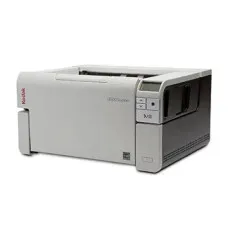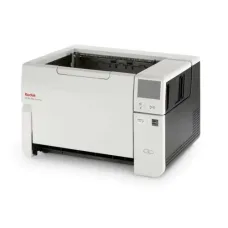
Kodak S3140 Max Document Scanner
৳35,700
Showing 1 to 6 of 6 (1 Pages)
Kodak is one of the world's best-known imaging brands, with a heritage closely associated with photography, film, image science and visual storytelling. Today, the Kodak name is used across a broad range of consumer and imaging products, including film, instant cameras, photo printers, digital film scanners, memory cards, batteries, lenses, lighting products and other photography-related solutions. Kodak-branded products are particularly attractive to customers who value the combination of traditional photographic character and modern digital convenience.
For consumers, Kodak products can cover different stages of the photography journey. A photographer may use Kodak film to capture an image, a Kodak film scanner to digitise negatives, a Kodak memory card to store digital photographs, and a Kodak portable photo printer to create physical prints. The brand also offers products for everyday electronics, including batteries and lighting solutions.
In Bangladesh, Kodak can therefore appeal to photographers, students, content creators, families, travellers, hobbyists, businesses and anyone interested in preserving or sharing photographs. Unix Network serves customers in Jessore (Jashore) and across Bangladesh with technology products, photography accessories and practical buying guidance.
Kodak's current consumer portfolio is considerably broader than traditional photographic film. Its product categories include film cameras and film-related accessories, instant cameras, portable photo printers, memory cards, digital film scanners, batteries, lenses, binoculars, LED lighting products and other consumer technology products.
The brand also has a separate professional information-management ecosystem through Kodak Alaris, which focuses on document scanners, intelligent document processing and information capture. This distinction is important when customers search for Kodak products because consumer Kodak imaging products and Kodak Alaris business scanning equipment serve different markets.
| Kodak Product Category | Typical Use |
|---|---|
| Film and film cameras | Analogue photography, creative photography and photography enthusiasts |
| Instant cameras | Instant photography, events, parties and personal memories |
| Mini photo printers | Portable printing from smartphones and compatible devices |
| Memory cards | Digital cameras, mobile devices and compatible electronics |
| Digital film scanners | Converting negatives and slides into digital files |
| Batteries | Cameras, electronics, remotes, toys and other compatible devices |
| Lenses and optical products | Photography and visual applications |
| Lighting products | Home, workplace, photography and general illumination |
Kodak has a deep connection with traditional photographic film. Film photography remains popular among enthusiasts, professional photographers, students of photography and creators who want a distinctive visual character that differs from ordinary digital images.
Analogue photography also provides a different creative process. Instead of immediately reviewing every photograph on a screen, photographers must think carefully about exposure, composition and timing before pressing the shutter.
Kodak film can therefore be relevant to customers who want to experiment with analogue photography, build a film collection, photograph special occasions or develop a particular photographic style.
When buying film in Bangladesh, customers should consider film type, format, ISO sensitivity, colour or black-and-white characteristics, storage conditions and processing availability. Film should be stored appropriately to protect its performance before exposure and processing.
Kodak-branded film cameras provide an accessible way for users to explore analogue photography. Depending on the camera type, customers can find simple point-and-shoot designs as well as products aimed at enthusiasts who want greater control over the photographic process.
Film cameras can be attractive for travel, street photography, personal projects, weddings, events and creative photography. Disposable or simple film cameras can also be useful when users want a straightforward shooting experience without complicated settings.
Before purchasing a Kodak film camera, check the supported film format, lens characteristics, flash functionality, battery requirements and whether the camera is reusable or intended for a limited number of exposures.
Instant photography combines the experience of taking a photograph with the ability to create a physical print shortly afterwards. Kodak offers instant camera products that combine this traditional experience with modern digital features.
Instant cameras can be particularly popular for parties, weddings, birthdays, travel, family gatherings and creative events. The physical print can become part of a scrapbook, gift, memory wall or personal collection.
Some Kodak instant camera products also combine camera and printer functionality, giving users additional flexibility for producing physical photographs from digital content.
Kodak mini photo printers are designed for users who want to create physical photographs without relying on a conventional desktop printer. Products such as the Kodak Mini 2 Era and Mini 3 Era are positioned around compact photo printing and mobile-friendly convenience.
A portable photo printer can be useful for students, travellers, families, scrapbook creators, event organisers and social-media users who want to turn digital photographs into physical keepsakes.
Before buying a Kodak photo printer, customers should check the compatible mobile operating system, connection method, print size, consumable availability and replacement paper requirements.
Kodak Dock photo printers are designed around the concept of convenient photo printing from mobile devices. This type of printer can be useful for users who prefer physical photographs rather than keeping every image exclusively on a smartphone.
A dock-style photo printer can be particularly convenient for home use, parties and family gatherings because photographs can be printed shortly after being captured.
Customers should consider the availability and cost of compatible photo paper and cartridges or printing consumables before choosing a particular model. Running cost is an important part of the overall ownership experience.
Kodak memory cards provide removable storage for compatible digital devices. Depending on the specific product, memory card formats can include SD and microSD families designed for cameras, smartphones and other compatible electronics.
A memory card should always be selected according to the device's supported format, capacity and speed requirements. A professional camera recording high-resolution images or video may have different requirements from a basic compact camera.
For photographers, capacity is only one consideration. Write performance can be important when continuously capturing photographs or recording video. Users should therefore check the camera manufacturer's recommended card specifications before purchase.
SD cards are commonly used in digital cameras and other imaging equipment. A suitable Kodak SD card can provide additional storage for photographs and video while allowing users to transfer files between compatible devices.
When choosing an SD card, consider the camera's supported capacity, speed class, UHS specification and intended recording format. A card that works for ordinary photography may not necessarily be appropriate for demanding continuous video recording.
Professional photographers should also consider their workflow. Carrying multiple appropriately rated cards can provide flexibility during long shooting sessions and reduce dependence on one storage medium.
MicroSD cards are widely used in compact electronic devices. Depending on compatibility, they can be found in smartphones, action cameras, portable devices and other equipment.
Kodak microSD products can be useful for expanding compatible device storage, recording photographs and video or transferring files between supported systems.
Before purchasing, customers should verify the device's maximum supported capacity and required performance class. For action cameras and high-resolution video devices, sustained write performance can be particularly important.
One of the most useful Kodak products for analogue photography enthusiasts is the digital film scanner. Film scanning provides a bridge between traditional photography and modern digital workflows.
Kodak digital film scanners can be used to convert compatible negatives and slides into digital image files. This allows older photographic collections to be viewed, edited, shared and backed up using modern computers and storage devices.
A digital film scanner can be valuable for families with old photographs, photographers digitising archives, collectors preserving film and creative users who want to edit analogue images using modern software.
The Kodak Mini Digital Film Scanner is designed for consumers who want to digitise compatible film without requiring a large professional scanning system. Depending on the model and supported film type, users can scan negatives and slides and save the resulting digital files to removable storage.
This type of scanner can be particularly useful for personal archives. Families may have boxes of old negatives that are difficult to view without specialised equipment. Digitising those images can make them easier to organise, share and preserve.
Before buying a Kodak film scanner, check the supported film formats, scanning resolution, output method, power requirements and included accessories.
Old negatives can deteriorate over time if they are stored in unsuitable conditions. Digitisation provides a practical way to create accessible copies of valuable photographs.
A Kodak film scanner can help users transfer compatible negatives or slides into digital files. Once scanned, the files can be organised into folders, edited with image software and backed up to separate storage.
Scanning is not a replacement for preserving the original film. Where the original negatives have historical or sentimental value, keeping them in suitable archival conditions remains worthwhile.
Kodak also offers a range of batteries for everyday electronics. Its consumer portfolio includes alkaline batteries, lithium batteries, button cells and hearing-aid batteries.
Batteries can be used in compatible devices such as remote controls, toys, calculators, flashlights, cameras, scales and other electronic equipment. The correct battery chemistry and physical size should always be checked before installation.
Kodak alkaline batteries can be suitable for many everyday devices, while lithium batteries can be relevant to compatible electronics requiring a different power profile. Button cells are designed for compact devices and should never be substituted without checking the exact required specification.
Alkaline batteries are commonly used in everyday household electronics. Kodak offers alkaline battery products intended for compatible consumer devices where this battery chemistry is appropriate.
Typical applications include remote controls, toys, clocks, flashlights and other low-to-moderate power devices. Battery life depends heavily on the device's power consumption and usage pattern.
Customers should check the battery size, polarity and device requirements before purchase. Mixing old and new batteries or different battery chemistries in the same device is generally best avoided.
Kodak lithium batteries are designed for compatible high-drain or higher-performance electronic applications. Lithium battery products can offer advantages in certain devices where longer service life or a particular power profile is required.
As with all batteries, compatibility is essential. Customers should use only the battery chemistry and size recommended by the device manufacturer.
Button cell batteries are compact power sources used in small electronic devices such as calculators, watches, scales, toys, remote controls and other compatible equipment.
Kodak offers button cell products in different sizes. The number printed on a button cell identifies its specific format, so customers should never select a replacement based only on physical appearance.
Button batteries must also be stored and handled responsibly, particularly around children and pets, because accidental ingestion can create a serious safety emergency.
Kodak offers zinc-air hearing-aid batteries designed for compatible hearing devices. These batteries are produced in specific sizes and require the correct battery format for the hearing aid.
Customers should check the hearing aid's recommended battery number before purchase. Proper storage and handling can also help maintain battery performance before use.
Kodak's broader consumer portfolio includes optical products such as lenses and binoculars. These products extend the brand beyond traditional film and printing into everyday visual applications.
Photographic lenses should be selected according to the camera mount and intended shooting style. Focal length, aperture, compatibility and image requirements all influence the suitability of a lens.
Binoculars can be useful for travel, wildlife observation, outdoor activities and general viewing. Magnification and objective-lens size should be considered together because higher magnification does not automatically mean a better experience.
Kodak also offers lighting products designed for home, workplace and outdoor applications. LED lighting can provide an efficient alternative to traditional lighting technologies when the correct product is selected.
For general household use, customers should consider brightness, colour temperature, fitting type, power consumption and intended location. For photography or film digitisation, consistent illumination can be more important than simply choosing the brightest light source.
Kodak remains particularly relevant to photography enthusiasts because its ecosystem connects traditional film, digital storage and physical printing. Photographers can choose different products according to the stage of their workflow.
A film photographer may use Kodak film and later digitise negatives with a film scanner. A digital photographer may use Kodak memory cards and a portable photo printer. A family documenting old photographs may use a Kodak scanner to preserve an analogue archive.
This flexibility makes Kodak suitable for both traditional and modern photographic workflows.
Content creators increasingly work across smartphones, cameras, computers and physical media. Kodak products can support several parts of that workflow, particularly portable printing, memory storage, batteries and photography-related accessories.
A creator may use a compatible Kodak memory card for camera storage and later produce physical prints using a Kodak portable photo printer. The practical benefit is having both digital and physical versions of selected content.
Creators should nevertheless select each product according to the actual camera or device specifications rather than assuming every Kodak accessory is universally compatible.
Students can use Kodak products for creative projects, photography assignments, school events and personal memory keeping. Compact photo printers can be useful for scrapbooks, project displays and creative journals, while film cameras can provide an interesting introduction to analogue photography.
For students studying photography or visual communication, working with film can also provide a practical understanding of exposure, composition and image development.
Photography is often used to preserve family memories, and Kodak products can support both taking and printing photographs. Instant cameras and compact photo printers can make it easy to turn digital moments into physical photographs.
Families with older film collections can also use digital film scanners to preserve photographs that might otherwise remain inaccessible in boxes or albums.
Kodak-branded consumer products can also be useful in small business environments where batteries, lighting, photo printing or visual documentation are required.
For organisations searching specifically for high-volume document scanning, however, Kodak Alaris is the more relevant part of the Kodak ecosystem. Its professional scanner portfolio includes connected, office and production scanners, with solutions designed for document capture and information processing.
Kodak Alaris products can support organisations such as financial institutions, healthcare providers, government offices, educational organisations, legal firms and BPO or service operations that need structured document digitisation.
Kodak Alaris develops professional document scanners ranging from compact office models to high-volume production systems. These are designed for businesses that need to convert paper documents into digital information efficiently.
Modern Kodak Alaris scanners can include automatic document feeding, image processing, network connectivity, workflow features and software integration depending on the model. Some systems are designed for high-volume environments where large quantities of documents must be processed consistently.
Customers should distinguish these professional document scanners from consumer Kodak film scanners. A film scanner is designed for photographic negatives or slides, whereas a document scanner is designed primarily for paper documents and business workflows.
Professional Kodak Alaris scanners include technologies designed to improve document feeding, image quality and workflow efficiency. Depending on the scanner family, features can include intelligent document feeding, dual-light illumination, integrated flatbeds, network connectivity and high-capacity automatic document feeders.
Some models also support Smart Touch technology, which can simplify repetitive scanning workflows by allowing users to configure one-touch scanning jobs. Depending on the setup, documents can be converted into searchable formats and sent to applications, folders, email or supported cloud destinations.
For businesses, the value of a scanner should therefore be evaluated not only by scanning speed but also by workflow integration, document handling, software compatibility and expected daily volume.
Smart Touch is a workflow feature available on many Kodak Alaris document scanners. It is designed to simplify recurring scan operations by allowing users to configure scanning jobs for different destinations and output formats.
For an office, this can be useful when employees repeatedly scan invoices, contracts, forms, identification documents or other records into defined digital workflows.
The exact functions available depend on the scanner and software configuration, so businesses should verify compatibility before planning a document-management workflow.
Kodak's product quality should be considered according to the specific product category. A consumer photo printer, film scanner, memory card and professional document scanner have completely different construction requirements.
Professional Kodak Alaris production scanners are designed for demanding document-processing environments, while consumer photography products prioritise portability, convenience and ease of use.
Customers should therefore evaluate build quality according to intended usage rather than assuming every product carrying the Kodak name is designed for the same level of workload.
Compatibility is especially important with Kodak products because the brand covers many different technologies. A memory card must match the camera's supported format and capacity. A battery must match the device's specified size and chemistry. A photo printer requires compatible paper and mobile software. A film scanner must support the particular film format.
For professional document scanners, compatibility includes operating systems, scanning software, document-management platforms, network infrastructure and workflow requirements.
Customers should therefore provide the exact device model when they are unsure which Kodak accessory is appropriate. This is more reliable than selecting an accessory solely from its appearance or general product category.
Kodak product prices in Bangladesh vary significantly because the brand covers everything from small batteries and memory cards to instant cameras, portable photo printers and professional imaging equipment.
Pricing can depend on product type, capacity, film format, printing technology, included accessories, consumable requirements and local stock availability.
When comparing Kodak products, customers should consider total ownership cost rather than the initial purchase price alone. For example, a photo printer also requires compatible paper, while a film camera requires film and processing or scanning.
Portable photo printers can appear inexpensive when considering only the printer itself, but ongoing printing costs can influence the overall value. Before buying a Kodak photo printer, check the price and availability of compatible paper or printing media.
For frequent printing, the cost per photograph can be more important than the initial hardware price. For occasional personal use, portability and convenience may be more important than achieving the lowest possible print cost.
Choosing a Kodak memory card should start with the device rather than the storage capacity. Check the supported card format and the camera or device's recommended speed class.
For ordinary photography, capacity and general compatibility may be the main considerations. For high-resolution video, burst photography or professional cameras, write performance and sustained recording capability become more important.
It is also sensible to keep important photographs backed up to another storage device. A memory card should not be treated as the permanent archive for irreplaceable photographs.
Film selection depends on the camera, lighting conditions and desired photographic appearance. ISO sensitivity affects how the film responds to available light, while colour and black-and-white films provide different creative possibilities.
Customers should also consider film format and processing availability before purchase. Film that is difficult to process locally may require additional planning and cost.
Proper storage is important because film is sensitive to environmental conditions. Follow the storage recommendations supplied with the specific product.
Unix Network serves customers looking for technology, computer and imaging products in Jessore and across Bangladesh. Customers interested in Kodak memory cards, photo printers, batteries, film-related products or compatible accessories can check current availability and receive practical product guidance.
For customers in Jessore, the local showroom provides a convenient option for discussing technology requirements before purchasing. Customers outside Jashore can also order available products for delivery across Bangladesh according to current stock and delivery arrangements.
Warranty conditions vary according to the exact Kodak product, product category, seller and local distribution arrangement. Customers should confirm the applicable warranty before purchasing and retain their sales invoice or purchase documentation.
Consumable products such as film, printing media and batteries naturally have different handling and replacement considerations from electronic hardware. Customers should follow the product-specific storage, installation and usage recommendations.
Unix Network provides after-sales assistance for applicable Kodak products according to the relevant warranty and service policies.
Customers outside Jessore can purchase available Kodak products for delivery across Bangladesh. Before ordering, customers should confirm the exact model, product format and compatibility requirements.
For photography products, providing the camera model can help determine whether a particular memory card, battery, film accessory or other product is suitable. For photo printers, customers should also confirm the required printing media.
What is Kodak best known for?
Kodak is historically associated with photography and film and continues to offer products covering film, cameras, photo printers, memory cards, film scanners, batteries and other imaging-related products.
Does Kodak still make film?
Yes. Kodak continues to offer photographic film products for analogue photography.
Does Kodak make digital cameras?
Kodak-branded digital imaging products have existed across different periods and markets, while the current consumer portfolio includes products such as instant cameras, photo printers, film scanners, memory cards and other imaging products.
Does Kodak make photo printers?
Yes. Kodak offers portable and instant photo printing products, including Mini and Dock product families.
Does Kodak make memory cards?
Yes. Kodak offers memory cards for compatible digital devices, including photography-related storage products.
Does Kodak make film scanners?
Yes. Kodak offers consumer film scanning products designed to digitise compatible negatives and slides.
Can Kodak film scanners scan old negatives?
Compatible Kodak film scanners can digitise supported negative formats. Customers should verify the scanner's supported film type before purchase.
Does Kodak make batteries?
Yes. Kodak's consumer portfolio includes alkaline, lithium, button-cell and hearing-aid battery products.
Are Kodak memory cards suitable for cameras?
Compatible Kodak memory cards can be used in cameras that support the card's format, capacity and performance specifications. Always check the camera's requirements before purchasing.
Where can I buy Kodak products in Jessore?
Customers can check available Kodak products at Unix Network in Jessore. The store also serves customers throughout Bangladesh.
Kodak remains a distinctive imaging brand because its product ecosystem connects the traditional world of film photography with modern digital tools. Film, instant cameras, photo printers, memory cards and digital film scanners each serve different parts of the photographic experience, while batteries, lighting and other consumer products extend the brand into everyday technology.
The best Kodak product depends on the customer's actual requirement. A photographer choosing a memory card should focus on camera compatibility and recording performance, while someone preserving old photographs may need a suitable film scanner. A family wanting physical memories may prefer an instant camera or portable photo printer.
For customers searching for Kodak products in Bangladesh, Unix Network provides product guidance, local showroom support in Jessore and delivery options for customers across the country. Choosing the correct Kodak product based on compatibility, intended use, consumables and long-term value can make the purchase more useful and economical.