
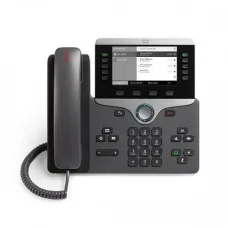
Cisco IP Phone Price in Bangladesh
Showing 1 to 3 of 3 (1 Pages)
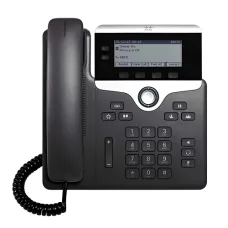

Cisco IP Phones are business-grade VoIP communication devices designed to provide reliable voice calling over IP networks. They are widely used in offices, corporate environments, call centres, reception areas, educational institutions, healthcare facilities, hotels and other organisations that require centrally managed business telephony.
Unlike traditional analogue desk phones, Cisco IP Phones connect to an Ethernet network and use IP-based communication platforms for calling. Cisco's current IP phone portfolio includes the 9800, 8800, 7800 and 6800 series, along with conference and specialised models. Depending on the series and model, features can include high-quality audio, Gigabit Ethernet, colour displays, programmable keys, video calling, wireless connectivity, headset support and integration with Cisco or supported third-party calling platforms.
Cisco IP Phone in Bangladesh
Cisco IP Phones are suitable for organisations in Bangladesh that want to build or expand a professional IP telephony infrastructure. They can be deployed alongside business networking equipment, PoE switches, routers, IP-PBX platforms and unified communications systems to create an organised workplace calling environment.
Different Cisco models are designed for different requirements. Entry-level phones can be suitable for employees with standard calling needs, while advanced 8800 and 9800 series models are intended for knowledge workers, executives, reception desks, collaborative environments and users who require additional communication features.
What Is a Cisco IP Phone?
A Cisco IP Phone is a network-connected telephone that converts voice communication into IP traffic. Instead of relying on a conventional telephone line, the device communicates through an Ethernet network and an appropriate VoIP or unified communications service.
This architecture allows organisations to manage telephone services through their existing network infrastructure. Depending on the selected model and deployment environment, Cisco IP Phones can work with Cisco Unified Communications Manager, Webex Calling, BroadWorks and supported third-party UCaaS platforms.
Cisco IP Phone Series
| Series | Typical Positioning | Key Characteristics |
|---|---|---|
| Cisco IP Phone 9800 Series | Modern business and enterprise communication | Advanced desktop collaboration, PhoneOS and flexible calling platform support |
| Cisco IP Phone 8800 Series | Business, executive and knowledge-worker environments | Full-featured VoIP, selected HD video models, collaboration features |
| Cisco IP Phone 7800 Series | Everyday business communication | Reliable, full-featured and cost-effective VoIP |
| Cisco IP Phone 6800 Series | Affordable everyday business calling | Business-grade audio, Ethernet integration and low power usage |
| Cisco Conference Phones | Meeting rooms and conference spaces | Designed for group conversations and conference calling |
Cisco's official IP phone portfolio currently highlights the 9800, 8800, 7800 and 6800 series alongside conference phones.
Cisco IP Phone 6800 Series
The Cisco IP Phone 6800 Series is positioned as an affordable business VoIP solution. Cisco describes the series as providing reliable, high-fidelity voice communication while supporting approved UCaaS platforms. Selected models include integrated Ethernet switching, which can allow a co-located computer to share the network connection through the phone and reduce desktop cabling.
The 6821 uses a 10/100 Ethernet switch, while the 6841 and 6851 provide Gigabit Ethernet switching according to Cisco's product information. This makes the series suitable for organisations looking for cost-effective desktop IP telephony.
Cisco IP Phone 7800 Series
The Cisco IP Phone 7800 Series is designed for everyday business communication. Cisco describes these models as reliable, full-featured and secure VoIP phones that can be deployed on premises, with Cisco Webex Calling or through approved third-party UCaaS providers.
The 7800 family is suitable for employees who require dependable business calling without necessarily needing the advanced video and collaboration capabilities found on higher-end models.
Cisco IP Phone 8800 Series
The Cisco IP Phone 8800 Series provides a broader set of communication and collaboration capabilities. Cisco positions the series for businesses of different sizes, with models intended for knowledge workers, administrative staff, executives, open workspaces and conference environments.
Depending on the model, features can include HD voice, HD video collaboration, mobile-device integration, optional key expansion modules and expansion microphones. Cisco lists models including the 8811, 8841, 8845, 8851, 8861, 8865 and Video Phone 8875 within the 8800 family.
Cisco 9800 Series
Cisco's current IP phone portfolio also includes the 9800 Series. Cisco describes its newer PhoneOS approach as supporting platforms including Cisco Unified Communications Manager, Webex Calling, BroadWorks and other third-party cloud calling environments.
This makes the newer generation relevant to organisations looking for modern business communication hardware with flexible deployment options.
Business-Grade VoIP Communication
Cisco IP Phones are designed around professional communication rather than consumer telephone use. They can be integrated into structured business networks and managed as part of a larger unified communications environment.
Depending on the model and software platform, organisations can implement features such as extension-based calling, call transfer, conferencing, voicemail integration, directory access, programmable functions and centralised management.
Ethernet Network Connectivity
Network connectivity is a fundamental part of Cisco IP Phone deployment. Many Cisco business models include an Ethernet connection, with selected 6800 models providing integrated Ethernet switching for a nearby computer.
This architecture can help simplify workstation connectivity because a computer and IP phone can share the same network drop where the specific model and network configuration support that arrangement.
Power over Ethernet Support
Many business IP phone deployments use Power over Ethernet, allowing compatible network infrastructure to provide both network connectivity and electrical power through the Ethernet connection. The exact PoE standard, power requirement and optional power-adapter support depend on the individual Cisco phone model.
When selecting a Cisco IP Phone, customers should therefore verify the exact model's power requirements and ensure that the connected network switch or PoE injector provides the required power.
High-Quality Voice Communication
Clear voice communication is one of the primary purposes of Cisco's business IP phone portfolio. Cisco describes its 6800 family as delivering high-fidelity business-grade audio, while the 7800 and 8800 families provide different levels of functionality for professional communication environments.
Depending on the model, users may also have access to speakerphone operation, handset calling, headset connectivity and additional audio features.
Display and User Interface
Cisco IP Phones are available with different display technologies and interface configurations depending on the model. Entry-level devices generally focus on essential call controls, while advanced models can provide larger colour displays and richer collaboration interfaces.
For example, higher-end 8800 models expand beyond basic voice communication, with selected devices supporting HD video collaboration and additional collaboration accessories.
Video Calling on Selected Models
Not every Cisco IP Phone provides video functionality. Selected 8800 Series models support HD video collaboration, giving organisations the option to deploy desktop video communication where required.
Businesses purchasing phones specifically for video meetings should verify the exact model rather than assuming that every Cisco IP Phone includes a camera or video capability.
Key Expansion and Accessories
Selected Cisco 8800 Series phones support optional key expansion modules, allowing organisations to add additional programmable keys for users who manage multiple extensions, contacts or call functions. Cisco also lists wired and wireless expansion microphones for selected conference-oriented applications.
This makes the appropriate model easier to tailor for receptionists, executive users, operators and other employees with higher call-management requirements.
Security and Centralised Management
Security is an important consideration in enterprise telephony. Cisco highlights security features across its IP phone portfolio and describes the 8800 Series as being built with security in mind to help protect communications and sensitive information.
Depending on the deployment platform and model, administrators can centrally configure and manage compatible phones as part of an organisational communications environment.
Cisco IP Phone Technical Features
- IP-based voice communication
- Ethernet network connectivity
- Business-grade VoIP functionality
- Models with integrated Ethernet switching
- Selected models with Gigabit Ethernet
- Selected models supporting Power over Ethernet
- Speakerphone functionality on applicable models
- Handset and headset connectivity
- Programmable keys on selected models
- Optional key expansion modules on selected 8800 models
- HD voice capabilities on supported models
- HD video collaboration on selected 8800 models
- Centralised management through compatible Cisco platforms
- Support for on-premises and cloud deployment depending on model
Cisco IP Phones for Offices
Cisco IP Phones are suitable for corporate offices where employees need dedicated desk-based communication. A centralised VoIP platform can allow organisations to manage extensions and calling functions while using the existing IP network as the communications infrastructure.
Different departments can use different phone models according to their requirements. Standard employees may need only an affordable voice phone, while executives, receptionists and managers may benefit from models offering additional programmable controls or collaboration capabilities.
Cisco IP Phones for Call Centres
Call centres and customer service departments can use compatible Cisco IP Phones as part of a larger voice infrastructure. The exact phone model should be selected according to the organisation's call-management software, headset requirements, network design and unified communications platform.
For environments where employees handle a high volume of calls, features such as programmable buttons, headset support, call transfer and directory integration can improve workflow efficiency.
Cisco IP Phones for Reception Desks
Receptionists often need quick access to multiple extensions and call-handling functions. A suitable Cisco model combined with optional expansion hardware can provide additional programmable controls for managing frequent incoming calls and internal transfers.
The appropriate configuration depends on the number of extensions, expected call volume and the organisation's telephony platform.
Cisco IP Phones for Hotels and Institutions
Hotels, educational institutions, healthcare organisations and other large facilities can use IP telephony to connect multiple departments and locations through a managed network. Cisco's range includes standard desk phones as well as conference-oriented devices, allowing organisations to select hardware according to each workspace.
Cisco IP Phone Deployment
A typical Cisco IP phone deployment requires more than the handset itself. The organisation may also need a compatible network switch, PoE infrastructure or power adapter, IP addressing, DHCP configuration, voice VLAN configuration and an appropriate call-control or cloud calling platform.
Before purchasing a large quantity of phones, businesses should confirm platform compatibility, firmware requirements, licensing requirements and the exact Cisco firmware type supported by the chosen service.
Multiplatform Firmware
Cisco offers selected IP phones with Multiplatform Phone firmware. Cisco's 6800 and 8800 Multiplatform families are designed for supported third-party UCaaS environments, providing organisations with alternatives to traditional Cisco Unified Communications deployments.
This distinction is important when purchasing Cisco phones because enterprise firmware and Multiplatform firmware are not interchangeable assumptions. Buyers should verify the exact SKU and firmware compatibility with their intended VoIP provider before ordering.
Important Things to Consider Before Buying
- Confirm the exact Cisco model and part number.
- Check whether the phone uses enterprise firmware or Multiplatform firmware.
- Verify compatibility with Cisco Unified Communications Manager, Webex Calling or the intended third-party UCaaS provider.
- Check whether Power over Ethernet is required.
- Confirm the supported PoE standard and power requirements.
- Verify whether a separate power adapter is included or required.
- Check Ethernet speed requirements.
- Confirm whether video calling is required.
- Check headset and expansion-module compatibility.
- For used or refurbished units, verify firmware, cosmetic condition and reset status before deployment.
Choosing the Right Cisco IP Phone
| Requirement | Recommended Direction |
|---|---|
| Basic business calling | Cisco 6800 or 7800 series |
| Affordable everyday VoIP | Cisco 6800 series |
| Standard office communication | Cisco 7800 series |
| Advanced business communication | Cisco 8800 series |
| Executive or knowledge-worker requirements | Selected Cisco 8800 or 9800 models |
| Desktop video collaboration | Selected Cisco 8800/video models |
| Conference room communication | Cisco conference phone models |
| Third-party UCaaS deployment | Compatible Multiplatform model |
Who Should Buy Cisco IP Phones?
- Corporate offices
- Small and medium-sized businesses
- Call centres
- Reception desks
- Hotels
- Educational institutions
- Healthcare organisations
- Government and professional offices
- Managed service providers
- Businesses upgrading from traditional telephone systems
Cisco IP Phone Price in Bangladesh
The price of a Cisco IP Phone in Bangladesh varies substantially according to the series, model, firmware type, condition and included accessories. Entry-level 6800 and 7800 models are positioned differently from advanced 8800 and newer 9800 devices, while used or refurbished Cisco phones can have significantly different pricing from new units.
Before purchasing, customers should confirm the exact model number, firmware type, condition, power adapter availability, warranty and compatibility with their existing VoIP infrastructure.
Buy Cisco IP Phones from Unix Network
Unix Network is a computer, networking and IT equipment retailer in Jessore (Jashore), Bangladesh. Customers looking for Cisco networking and communication equipment can enquire about available IP phone models according to their business requirements.
For organisations in Jessore, Unix Network can provide a convenient local source for networking and communication hardware. Customers outside Jessore can also enquire about available delivery options across Bangladesh.
Networking Requirements for Cisco IP Phones
A reliable network is essential for VoIP communication. Businesses should ensure that the network provides suitable bandwidth, low latency, appropriate voice VLAN configuration and sufficient PoE capacity where applicable.
When deploying many phones, the network switch should also have enough Ethernet ports and power budget for the complete installation. Proper network planning can help maintain stable voice communication and simplify future expansion.
Warranty and After-Sales Support
Warranty coverage depends on the exact Cisco model, seller and condition of the product. New, refurbished and used Cisco IP Phones can have different warranty arrangements, so customers should confirm the applicable coverage before purchase.
Businesses purchasing multiple phones should also retain invoices, serial-number records and product documentation for future support or replacement requirements.
Frequently Asked Questions
What is a Cisco IP Phone?
A Cisco IP Phone is a network-connected business telephone that uses IP-based communication instead of a traditional analogue telephone connection.
Do Cisco IP Phones need the internet?
Not necessarily. An IP phone needs network connectivity to communicate with its call-control system. Whether internet access is required depends on whether the organisation uses an on-premises or cloud-based calling service.
Can Cisco IP Phones work with a normal network switch?
They can connect to Ethernet networks, but the exact requirements depend on the model and deployment. If the phone is intended to receive power through Ethernet, the network infrastructure must provide compatible PoE.
Do all Cisco IP Phones support Power over Ethernet?
No. PoE support and power requirements vary by model. Customers should check the exact phone's technical specifications before deployment.
Can Cisco IP Phones be used with Webex Calling?
Compatible Cisco IP Phone models can be deployed with Webex Calling. Cisco also offers phones and Multiplatform firmware designed for supported cloud calling environments.
What is Cisco Multiplatform firmware?
Multiplatform firmware is Cisco phone software intended for compatible third-party cloud and unified communications environments. Cisco offers Multiplatform versions within its 6800 and 8800 product families.
Are Cisco 6800 IP Phones suitable for small businesses?
Yes. Cisco positions the 6800 family as an affordable business VoIP solution, making compatible models suitable for organisations with everyday calling requirements.
What is the difference between Cisco 6800 and 8800 phones?
The 6800 series focuses on affordable everyday business communication, while the 8800 family provides a broader range of advanced collaboration capabilities, with selected models supporting HD video, mobile integration and expansion accessories.
Can Cisco IP Phones be used in an office?
Yes. Cisco IP Phones are designed specifically for business communication and can be deployed across offices, reception areas, meeting spaces and other professional environments.
Can I connect a computer through a Cisco IP Phone?
Selected Cisco models include an integrated Ethernet switch that allows a co-located computer to share the network connection. Cisco specifically identifies this capability on the 6821, 6841 and 6851 models, with the 6841 and 6851 offering Gigabit Ethernet switching.
Does every Cisco IP Phone support video calls?
No. Video functionality is available only on selected models. Cisco's 8800 portfolio includes specific phones designed for HD video collaboration.
Conclusion
Cisco IP Phones provide a professional foundation for modern business VoIP communication. With product families ranging from affordable 6800 and 7800 models to advanced 8800 and newer 9800 devices, Cisco offers options for different business sizes, workspaces and communication requirements.
For businesses in Jessore and across Bangladesh, selecting the correct Cisco IP Phone requires more than comparing appearance and price. The exact model, firmware type, VoIP platform, PoE requirements, network infrastructure and desired features should all be considered before purchase. Unix Network can help customers identify suitable Cisco IP phone hardware according to their existing network and business communication requirements.