


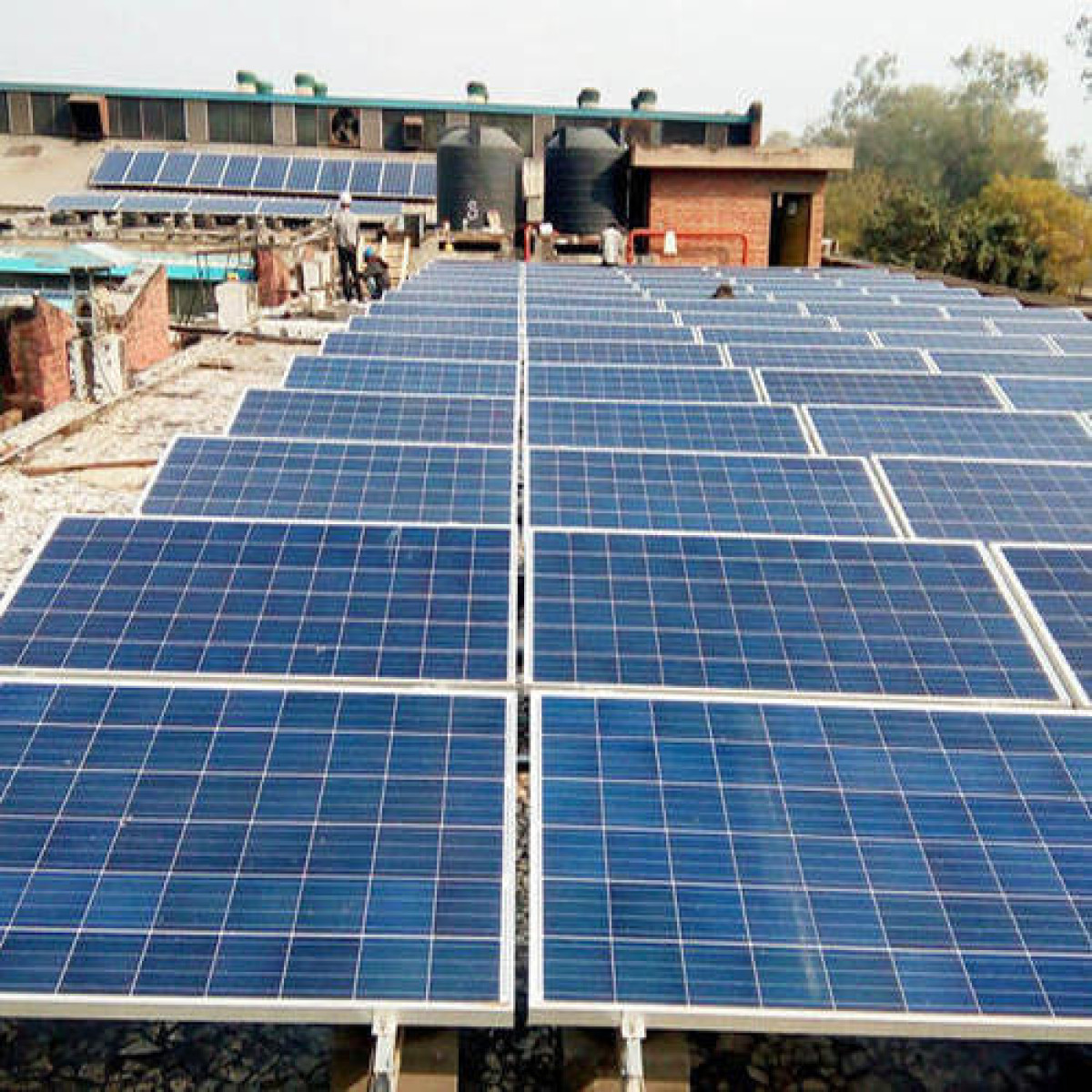
20KW Solar Power System
Now
৳1,200,000


Description
The Industrial 20KW Solar Power System is designed for organisations that need a substantial renewable-energy solution rather than a small household solar setup. A system at this capacity can be considered for factories, workshops, warehouses, offices, commercial buildings, educational institutions, farms, telecom facilities and other sites with significant electricity requirements. Unlike purchasing a single solar panel, selecting a 20KW system requires looking at the complete energy architecture: solar modules, inverter technology, mounting structure, protection equipment, cabling, monitoring, grid connection and, where required, battery storage. The right configuration depends on the customer's load profile and whether the project is intended to operate as an on-grid, off-grid or hybrid installation. The phrase Industrial 20KW Solar Power System should therefore not be interpreted as one universal specification or one fixed package. Different installations can use different panel capacities, inverter arrangements and storage options while still being designed around approximately 20KW of system capacity. For Bangladeshi businesses, careful system planning is particularly important because rooftop space, heat, dust, monsoon weather, shading and electricity consumption patterns all affect the practical result. Unix Network helps customers evaluate technology purchases according to their actual requirements, making this product suitable for buyers who want to investigate a commercial-scale solar solution with local support in Jessore (Jashore) and delivery options across Bangladesh.
Industrial 20KW Solar Power System Price in Bangladesh
The Industrial 20KW Solar Power System price in Bangladesh depends on the exact system configuration rather than simply the 20KW capacity stated in the product name. A basic on-grid installation and a battery-backed hybrid or off-grid installation can have very different total costs because batteries, backup capacity, inverter architecture, protection equipment and installation requirements add to the project. Solar module technology, manufacturer, panel efficiency, mounting structure, cable quality, monitoring equipment and project-specific engineering can also change the final quotation.
Current Bangladesh market listings show that 20KW solar systems can be offered at substantially different prices depending on configuration, seller, condition and warranty. This is why customers should be cautious about comparing one advertised figure with another without checking exactly what is included. A quoted system may include panels and inverter only, while another quotation may include mounting structures, DC and AC protection, cabling, installation and additional equipment.
For an accurate Industrial 20KW Solar Power System price in Bangladesh, customers should first decide whether the intended project is on-grid, off-grid or hybrid. They should then provide information about the site, expected load, operating hours, available roof area, backup requirement and existing electrical infrastructure. Unix Network can use these details to help customers understand which components need to be considered before purchasing.
Customers searching for Industrial 20KW Solar Power System price in Bangladesh should also compare long-term value instead of selecting the lowest initial quotation. A better-quality inverter, appropriately selected solar modules, reliable protection equipment and properly designed mounting system can matter considerably over the operating life of a commercial installation.
Industrial 20KW Solar Power System Overview
A 20KW solar power system is a sizeable photovoltaic installation intended to generate electrical power from sunlight. The solar array produces DC electricity, while power electronics manage that energy according to the type of system being installed. In an on-grid arrangement, a suitable solar inverter converts the generated DC electricity into AC electricity that can be used by compatible building loads and, where the applicable requirements are satisfied, integrated with the utility grid. An off-grid system adds energy storage and control equipment so that electricity can remain available when solar generation is unavailable. A hybrid system combines solar generation with batteries and other energy sources to provide greater operational flexibility.
The term 20KW generally describes a system's power capacity, but customers should not assume that every product sold under this name has identical equipment or generates the same amount of electricity each day. Solar production varies with sunlight, weather, temperature, shading, panel orientation, system losses and maintenance conditions. Consequently, the correct way to evaluate a commercial solar project is to examine the complete system design rather than treating the product name as a complete technical specification.
What Does 20KW Mean?
20KW means twenty kilowatts of power capacity. In a solar project, this figure is normally associated with the designed electrical capacity of the system, but the exact meaning can depend on the system architecture and the manufacturer's configuration. It should not be confused with 20KWh, which is a measure of energy storage or energy consumption over time.
For example, a 20KW solar installation can potentially produce different amounts of energy on different days. Strong sunlight may result in significantly better generation than a heavily cloudy day. Likewise, a system installed on a roof with partial shading will perform differently from an unobstructed installation. For commercial buyers, these differences make energy-yield estimation and site assessment more important than the headline capacity alone.
On-Grid 20KW Solar Power System
An on-grid configuration is designed to work alongside the utility electricity network. During periods when solar generation is available, the solar system can supply suitable building loads. Depending on the system design and applicable regulations, surplus generation may be exported to the grid through an approved arrangement.
This type of system can be attractive for businesses that consume substantial electricity during daylight hours. Factories, offices, shops and commercial buildings with daytime loads may be able to use a significant portion of the solar generation directly. The economic value depends on the customer's electricity consumption pattern, tariff structure, solar resource, system cost and applicable utility arrangements.
- Suitable for buildings with reliable grid access
- Useful where daytime electricity consumption is significant
- Can reduce reliance on grid electricity during solar production hours
- May be considered for applicable net-metering projects
- Normally requires a compatible grid-connected solar inverter
- Requires compliance with applicable electrical and utility requirements
Off-Grid 20KW Solar Power System
An off-grid 20KW system is designed for locations where the solar installation must operate without depending on the utility grid. It normally combines a solar array with an inverter, charge-management equipment and battery storage. The battery allows energy generated during suitable sunlight conditions to be used later.
Off-grid systems require particularly careful planning because the designer must account for both peak load and energy consumption. A business may require 20KW of instantaneous power but consume much less or much more energy over a complete day. Battery capacity therefore cannot be determined simply by multiplying the system's power rating by an arbitrary number of hours.
- Useful where grid electricity is unavailable or unsuitable
- Suitable for selected remote commercial installations
- Requires appropriate battery storage
- Requires careful load and energy analysis
- Can support critical equipment when properly designed
- Needs appropriate protection and monitoring equipment
Hybrid 20KW Solar Power System
A hybrid configuration combines solar generation with battery storage and another electricity source, commonly the utility grid or a generator. The exact operating behaviour depends on the inverter and control system. Hybrid installations can be useful where a business wants to use solar energy during the day while also retaining battery backup for selected loads or power interruptions.
Hybrid systems are often more complex than simple on-grid systems because the inverter needs to manage several energy sources. Battery chemistry, battery voltage, charge and discharge limits, backup-load capacity and system priorities must be considered when selecting the equipment.
Industrial 20KW Solar System Components
A complete commercial solar system normally consists of several interconnected components. The exact equipment depends on the project's design, so customers should ask for a component list before comparing quotations.
- Solar photovoltaic modules
- Solar inverter or hybrid inverter
- Battery storage where backup or off-grid operation is required
- Solar mounting structure
- DC photovoltaic cables
- AC power cables
- Suitable PV connectors
- DC isolation and protection equipment
- AC protection and distribution equipment
- Surge protection where required
- Earthing and electrical safety equipment
- Monitoring or communication equipment where supported
- Installation and commissioning components
The quality and compatibility of these supporting components can influence the reliability of the complete system. A customer should therefore avoid judging a commercial solar quotation solely by the number of panels or the advertised inverter capacity.
Solar Panels in a 20KW System
The solar modules are responsible for converting sunlight into DC electricity. A 20KW project can be assembled using different panel wattages, meaning the number of physical modules can vary. Higher-wattage modules can reduce the number of panels required, while lower-wattage modules may provide greater flexibility in certain layouts.
Panel selection should consider efficiency, physical dimensions, electrical characteristics, warranty, manufacturer reputation and availability. For large rooftops, higher-efficiency modules may be useful because they can provide more installed capacity from limited roof space. However, the most expensive or highest-efficiency panel is not automatically the best choice for every industrial site.
Solar Inverter for Industrial Applications
The inverter is a central part of the solar installation. Solar panels produce DC electricity, while most industrial, commercial and household equipment operates on AC electricity. The inverter manages this conversion and, depending on its design, can also control solar generation, battery charging, grid interaction and monitoring.
For a 20KW project, inverter selection should be based on the actual electrical requirements of the site. Customers should examine input voltage range, maximum PV voltage, MPPT operating range, input current, output characteristics, phase requirements, protection features, communication options and applicable installation requirements.
If the customer already has electrical infrastructure in place, the inverter should be selected to work correctly with that infrastructure. This is particularly important for commercial installations where unsuitable equipment can cause operational difficulties or unnecessary redesign costs.
Battery Storage for a 20KW Solar System
Battery storage is not automatically required for every 20KW solar system. An on-grid installation may operate without batteries, while an off-grid or backup-oriented hybrid installation normally requires storage. The required battery capacity depends on the loads that need backup and the desired backup duration.
Customers should distinguish between power capacity and energy capacity. The solar system or inverter may be capable of supplying a particular power level, while the battery determines how much stored energy is available over time. A business requiring several hours of backup for critical equipment may therefore need a substantially different battery configuration from a site that only wants short-duration backup.
Solar Panel Performance
Performance should be evaluated using more than the panel's nominal wattage. Efficiency, temperature behaviour, shading, orientation, cleanliness and electrical losses all influence actual production. In an industrial environment, roof dust and nearby structures can be particularly relevant.
A good system design attempts to place panels where they receive unobstructed sunlight for as much of the useful solar period as possible. The array should also be divided into appropriate strings and connected to suitable MPPT inputs so that the inverter can operate effectively.
Customers should ask for realistic generation estimates rather than guarantees of a fixed daily output. Weather conditions change, and no responsible solar supplier should promise identical generation every day.
Power Efficiency
Efficiency matters at both the module and system level. High-efficiency solar panels can help when roof space is limited, while an efficient inverter can reduce conversion losses. However, system efficiency is also affected by cable resistance, temperature, shading, connectors and other equipment.
For an industrial project, the most useful question is often not simply “Which panel has the highest efficiency?” but “Which configuration provides the required energy generation from the available roof area at an appropriate total cost?” This approach helps customers balance initial investment with long-term performance.
Industrial 20KW Solar System Build Quality
Commercial solar installations are exposed to outdoor conditions for long periods, so build quality deserves close attention. Solar modules must tolerate sunlight, rain, heat and mechanical stress. Mounting structures must remain stable under applicable environmental conditions, while cables and connectors must be appropriate for photovoltaic use.
In Bangladesh, installation quality is especially important because high temperatures, monsoon rain, humidity and dust can place additional demands on outdoor electrical equipment. Customers should ensure that the installation method, cable routing, mounting hardware and protection equipment are appropriate for the site rather than treating the solar panel as the only important component.
Roof and Mounting Structure
A 20KW solar system can require considerable roof area depending on the selected panel technology and layout. Before ordering, the installer should inspect the roof and determine whether the structure can safely support the intended equipment.
The mounting system should provide secure panel positioning while allowing appropriate drainage and maintenance access. Rooftop penetrations, where required, should be handled carefully to prevent water leakage. Flat roofs and sloped roofs can require different mounting approaches, and ground-mounted installations introduce their own structural and land-use considerations.
Compatibility
Compatibility is one of the most important technical considerations when buying an Industrial 20KW Solar Power System. The solar panels, inverter, batteries, protection devices and electrical distribution system must work together within their rated limits.
- Check the solar inverter's PV voltage limits
- Check maximum PV input current
- Check MPPT operating range
- Confirm panel string configuration
- Check battery voltage where applicable
- Verify inverter phase requirements
- Confirm AC output compatibility
- Check communication and monitoring requirements
- Verify connector and cable compatibility
- Confirm protection-device ratings
Customers replacing an existing inverter or expanding an existing solar array should be particularly careful. Adding panels with significantly different electrical characteristics can create an unsuitable string configuration. An expansion should therefore be designed rather than assembled simply by adding whatever panels are currently available.
Connectivity and Monitoring
Modern solar installations can provide monitoring through the inverter or a separate communication gateway. Depending on the equipment, monitoring may allow customers to view solar generation, system status, alarms, battery information and historical performance.
For businesses, monitoring can be valuable because unusual production can sometimes indicate a problem with a string, inverter, connection or installation condition. Remote monitoring may also reduce the time required to identify operational issues, although the available features depend on the selected equipment.
Industrial 20KW Solar System for Factories
Factories can be strong candidates for commercial solar because many manufacturing operations consume electricity during daylight hours. A properly designed rooftop system can help supply part of that daytime demand.
However, factories often have complex electrical loads, including motors, compressors, welding equipment, pumps, production machinery and variable-speed drives. These loads can have different electrical characteristics from computers and lighting. A proper electrical assessment is therefore important before choosing a solar inverter.
Where a factory operates multiple shifts, customers should also examine how much electricity is consumed outside daylight hours. This determines whether an on-grid system is sufficient or whether battery storage or another backup arrangement is worth considering.
Industrial 20KW Solar System for Offices
Offices can benefit from solar generation when electricity demand occurs mainly during working hours. Computers, networking equipment, lighting, air conditioning and other office systems can contribute to daytime consumption.
The available rooftop area and the building's electrical load should be evaluated before selecting the solar array. For an office with limited roof space, higher-efficiency modules may be useful. For a building with extensive roof space, a lower-cost configuration may sometimes provide better overall project economics.
Industrial 20KW Solar System for Warehouses
Warehouses often have large roofs that can provide useful space for solar modules. Their daytime electricity requirements may include lighting, ventilation, refrigeration, material-handling equipment and office loads.
The roof condition should be inspected before installation. A solar system is intended to remain in place for many years, so installing it on a roof that already requires major repair can create unnecessary future costs. Customers should consider the roof's expected service life and maintenance plan as part of the project.
Industrial 20KW Solar System for Shops and Commercial Buildings
Large shops, showrooms and commercial properties may use solar to support lighting, computers, cooling systems and other daytime loads. Solar can be particularly relevant where the building has a suitable roof and predictable daytime consumption.
Businesses should compare expected solar generation with their actual consumption schedule. If most electricity is consumed during daylight hours, direct solar utilisation may be attractive. If consumption is primarily after sunset, the customer may need to consider storage or another energy strategy.
Industrial 20KW Solar System for Farms
A commercial solar system can support agricultural operations such as water pumping, farm buildings, processing equipment, lighting and refrigeration. Pumping projects need special attention because motors can create different starting and operating requirements from ordinary resistive loads.
The solar system should therefore be designed around the actual pump, operating schedule and required water output. Customers should not assume that a 20KW label automatically means the system will operate any 20KW motor under all conditions.
Solar System for Critical Equipment
Businesses sometimes consider solar systems because certain equipment must remain operational during grid interruptions. In these situations, customers should identify critical loads separately from non-critical loads. A battery-backed system can then be designed to prioritise the equipment that genuinely needs backup.
This approach can be more practical than attempting to provide battery backup for an entire facility. Computers, networking equipment, security systems, communication devices and selected essential machinery can potentially be placed on a designated backup circuit when the system is appropriately designed.
20KW Solar System and Electricity Load Planning
Before purchasing, customers should prepare a list of significant electrical loads. Include equipment name, rated power, quantity, operating hours and whether the load must operate during power interruptions. This information helps the designer distinguish between peak demand and total daily energy consumption.
- Lighting loads
- Air conditioning
- Computers and networking equipment
- Refrigeration
- Pumps
- Motors
- Industrial machinery
- Fans and ventilation
- Security and surveillance equipment
- Telecommunications equipment
The resulting load profile can then be compared with the proposed solar array and inverter configuration. This is much more reliable than choosing a system based only on the building's monthly electricity bill.
Solar System Efficiency in Bangladesh
Bangladesh has useful solar resources, but the performance of an installation changes with season and weather. Bright sunny conditions can produce strong generation, while clouds and rain reduce available solar irradiance. High temperatures can also influence photovoltaic module output.
Customers should therefore evaluate annual or seasonal generation estimates instead of expecting the same result every day. A trustworthy quotation should explain the assumptions behind any generation estimate, including system capacity, orientation, shading and expected losses.
Durability and Reliability
Reliability is particularly important for an industrial installation because equipment failure can interrupt business operations. Solar modules, inverters, batteries and electrical protection equipment should be selected from sources that can provide appropriate documentation and warranty support.
Reliability also depends on installation quality. Loose connections, poor cable routing, inadequate protection or inappropriate mounting can create problems even when the main components are reputable. Customers should therefore ask who is responsible for installation and after-sales support before committing to a project.
Warranty Information
Warranty terms vary by component and manufacturer. Solar modules can have product and performance warranties, while inverters, batteries and other electrical equipment can have separate warranty periods and conditions. Customers should obtain the actual warranty terms applicable to the supplied model.
A warranty should not be evaluated only by its headline duration. It is also important to understand what is covered, who handles the claim, what documentation is required and whether transportation or labour is included. For an industrial project, local support can be particularly valuable because returning large or heavy equipment can be more complicated than returning ordinary consumer electronics.
- Confirm the exact product model
- Request applicable warranty documentation
- Ask what constitutes a warranty failure
- Keep invoices and serial-number records
- Confirm the local support process
- Check coverage for panels, inverter and battery separately
Maintenance Requirements
A commercial solar system is relatively low-maintenance compared with many mechanical power-generation systems, but regular inspection remains important. Panels can accumulate dust, leaves and bird droppings. Cables, connectors and mounting hardware should also be inspected periodically.
Monitoring data can provide another layer of maintenance information. If a system suddenly produces substantially less electricity than expected under similar weather conditions, the customer should investigate the cause rather than assuming that lower generation is normal.
- Inspect panels periodically
- Remove excessive dirt and debris safely
- Check mounting structures
- Inspect visible cables and connectors
- Review inverter alarms
- Monitor unusual changes in generation
- Check vegetation and nearby shading
- Maintain safe rooftop access
- Arrange professional electrical inspection when required
Industrial Solar System Safety
Solar PV systems produce DC electricity whenever sufficient light reaches the modules. This means the array remains an electrical energy source even when the utility grid is disconnected. Proper isolation and protection are therefore essential.
Industrial systems should use appropriately rated cables, connectors, breakers, isolation equipment and surge protection according to the system design. Earthing and bonding should also be handled correctly. Customers should use qualified installation professionals rather than treating a 20KW system as a simple plug-and-play product.
Solar Panel String Design
Multiple solar panels are normally arranged into strings to achieve an appropriate operating voltage for the inverter. Panels connected in series increase voltage, while parallel strings increase available current. The resulting configuration must remain within the inverter's specified limits.
Temperature must also be considered because photovoltaic voltage changes with temperature. A string that appears suitable under one condition should remain within the inverter's maximum input voltage under the expected operating range. This is one reason commercial solar installations require engineering rather than simple arithmetic based on nominal panel voltage.
Why High-Quality Components Matter
In a 20KW installation, a small component problem can affect a large amount of generating capacity. A faulty connector, incorrectly selected protection device or poorly routed cable can compromise part of the system or create a safety concern.
Customers should therefore look at the complete bill of materials and not just the solar panel brand. A professional quotation should make it reasonably clear what major equipment is included and what may need to be purchased separately.
Things to Consider Before Buying
- Determine whether the project is on-grid, off-grid or hybrid
- Measure the available installation area
- Assess roof condition and structural suitability
- Prepare a realistic load profile
- Identify critical loads requiring backup
- Check shading throughout the day
- Compare solar-panel technologies
- Check inverter compatibility
- Determine whether battery storage is necessary
- Review protection and earthing requirements
- Check warranty coverage for every major component
- Ask what is included in the quotation
- Consider installation and transportation costs
- Confirm product availability before ordering
Who Should Buy an Industrial 20KW Solar Power System?
This type of system is most relevant to customers whose electricity requirements justify a commercial-scale solar installation. It can be considered by factories, workshops, offices, warehouses, commercial buildings, farms, institutions and other facilities with substantial electrical demand.
It may not be the right solution for a small household with limited electricity consumption. Smaller homes may require a much lower-capacity system, while a very large factory may need a substantially larger installation. The correct capacity should always come from a load assessment and site evaluation rather than from a generic recommendation.
Advantages of a 20KW Solar System
- Provides a substantial renewable electricity source
- Can support significant daytime electrical loads
- Can make productive use of commercial rooftop space
- Can be configured for on-grid applications
- Can be designed with battery storage for hybrid or off-grid operation
- Can support businesses seeking greater energy flexibility
- Can reduce daytime dependence on utility electricity when appropriately sized
- Can be monitored through compatible inverter technology
Limitations to Understand
Solar power is not completely independent of environmental conditions. Generation decreases when sunlight is reduced, and battery systems add additional cost and maintenance considerations. A 20KW system also requires sufficient installation space and an appropriate electrical infrastructure.
Customers should not expect the system to produce its rated power continuously. The 20KW rating describes capacity under defined conditions rather than guaranteed continuous daily generation. Understanding this distinction helps prevent unrealistic expectations and makes financial planning more accurate.
Industrial 20KW Solar Power System vs Smaller Solar Systems
A 20KW installation is substantially more complex than a small residential solar setup. It involves more panels, greater electrical capacity and potentially larger inverters, distribution equipment and mounting structures. Engineering and installation quality therefore become increasingly important as system size increases.
Smaller systems can often be designed around a few essential loads, whereas an industrial system may need to interact with an entire building's electrical distribution. Businesses should consequently seek a system design appropriate to their specific facility rather than simply scaling up a small household system.
Industrial 20KW Solar Power System vs Generator Backup
Solar and generators solve different energy problems. A generator can provide electricity when fuel is available and the equipment is operating, while solar generation depends on sunlight. A hybrid energy strategy can combine multiple sources when business continuity is important.
Customers comparing solar with a generator should consider fuel costs, maintenance, noise, operating hours, battery requirements, electricity tariffs, roof availability and the nature of their loads. Solar may be particularly attractive for daytime consumption, while generators can provide dispatchable backup. The appropriate choice depends on the business's energy requirements.
Buying Genuine Industrial Solar Equipment
For a large investment, product authenticity and traceability are important. Customers should check manufacturer names, exact model numbers, serial information, documentation and warranty arrangements. The cheapest quotation is not necessarily the safest option if the origin or support arrangements are unclear.
When purchasing an Original Industrial 20KW Solar Power System or individual system components, customers should ask for a clear description of what is being supplied. This helps prevent misunderstandings about whether batteries, mounting structures, cables, protection equipment, installation and commissioning are included.
Why Buy from Unix Network?
Unix Network (ইউনিক্স নেটওয়ার্ক) is a technology retailer serving customers in Jessore and across Bangladesh. For customers considering an Industrial 20KW Solar Power System, the priority should be choosing a configuration that matches the site's actual electrical requirements. Unix Network can help customers discuss product options, availability and the technical information needed before purchase.
- Competitive pricing based on available product options
- Authentic products from established supply channels where available
- Expert advice for technology purchasing decisions
- Professional customer support
- Warranty support where applicable
- Local showroom availability in Jessore
- Nationwide delivery options across Bangladesh
- Technical guidance for compatibility considerations
Jessore and Jashore Solar System Support
Customers searching for an Industrial 20KW Solar Power System in Jessore can contact Unix Network to discuss available solutions and current stock. The business serves customers in Jashore as well as surrounding areas, making local communication convenient for buyers who prefer discussing a large technology purchase with a nearby retailer.
Customers from Jhenaidah, Magura, Narail, Satkhira, Khulna, Kushtia, Chuadanga and other areas can also enquire about product availability and delivery. For a large solar system, customers should confirm transportation arrangements before placing an order because panels and mounting equipment require more careful handling than ordinary computer accessories.
Buying an Industrial 20KW Solar Power System in Bangladesh
Customers who want to Buy Industrial 20KW Solar Power System in Bangladesh should first identify the intended application. A factory requiring daytime power may be better served by an on-grid system, while a remote facility may need off-grid storage. A business concerned about outages may find a hybrid configuration more appropriate.
When requesting a quotation, provide as much useful information as possible. The supplier should ideally know the location, approximate electricity load, operating schedule, roof area, existing grid arrangement and backup requirement. This allows the quotation to be based on the real project rather than a generic package.
Delivery Across Bangladesh
Unix Network can serve customers beyond its Jessore showroom, subject to product availability and delivery arrangements. Large solar modules and system components require appropriate packaging and transportation, so delivery time and handling should be confirmed before ordering.
For customers outside Jessore, it is advisable to verify the exact product list, quantity, packaging, warranty documentation and delivery terms before dispatch. This is especially useful for large commercial projects where receiving the correct quantity and model of every component is important.
After-Sales Support
After-sales service can be particularly important for a commercial solar installation because troubleshooting may involve several components. Customers should keep invoices, serial numbers, warranty documents and system information after purchase.
If an installation experiences reduced generation or an inverter alarm, customers should avoid making unsafe electrical changes themselves. Technical support should be contacted so that the problem can be diagnosed appropriately. Solar DC systems can remain energised in daylight, so professional handling is recommended for electrical faults.
Practical Buying Checklist
- Confirm the intended system type
- Confirm the required capacity
- Check the available roof area
- Assess structural condition
- Review daily and peak electricity consumption
- Identify critical backup loads
- Compare panel efficiency and technology
- Check inverter specifications
- Confirm battery requirements if applicable
- Review protection equipment
- Ask for the complete bill of materials
- Confirm warranty terms
- Confirm installation responsibilities
- Confirm delivery arrangements
- Keep purchase and warranty documentation
Frequently Asked Questions
What is an Industrial 20KW Solar Power System?
An Industrial 20KW Solar Power System is a commercial-scale photovoltaic power solution designed around approximately 20KW of electrical capacity. Depending on the project, it can be configured as an on-grid, off-grid or hybrid system. The exact components and configuration depend on the customer's electricity requirements, site conditions and desired operating method.
What is the Industrial 20KW Solar Power System price in Bangladesh?
The price varies according to the solar-panel technology, inverter, batteries, mounting structure, protection equipment, cabling, monitoring, installation and other components included in the package. On-grid systems without battery storage can have very different costs from hybrid or off-grid systems. Customers should request a quotation based on the exact required configuration rather than relying on one generic market price.
Is a 20KW solar system suitable for a factory?
It can be suitable for factories with an appropriate electricity demand and enough installation space. However, factory machinery can include motors and other demanding loads, so the inverter and electrical system should be selected after reviewing the actual load characteristics. A site assessment is recommended before purchasing.
Does a 20KW solar system require batteries?
Not necessarily. An on-grid system can operate without battery storage when designed for grid-connected operation. An off-grid system generally needs batteries, while a hybrid system may use batteries for backup and energy management. The battery requirement should be determined from the customer's backup objectives and load profile.
How much electricity can a 20KW solar system generate per day?
There is no single guaranteed daily figure. Generation depends on sunlight, weather, panel orientation, shading, temperature, system efficiency and other losses. A reliable estimate should be calculated for the specific installation site rather than assuming that a 20KW rating represents a fixed daily energy output.
Can an Industrial 20KW Solar Power System be used for net metering?
An appropriately designed grid-connected solar installation may be considered for applicable net-metering arrangements, but eligibility depends on the complete system and current regulatory and utility requirements. Customers should verify the exact equipment, inverter and application requirements before purchasing specifically for net metering.
How much roof space is required for a 20KW solar system?
The required area depends on the wattage and efficiency of the selected solar modules, their physical dimensions, panel spacing, mounting arrangement and access requirements. Therefore, a precise area cannot be determined from the 20KW capacity alone. A site survey should be completed before finalising the panel quantity and layout.
Which solar panel technology is best for a 20KW industrial system?
There is no universal best technology. Modern high-efficiency crystalline-silicon modules can be attractive when roof space is limited, while other configurations may provide better value where space is plentiful. Customers should compare efficiency, warranty, electrical characteristics, manufacturer reputation, price and availability as part of the complete system design.
Can a 20KW solar system run industrial motors?
It can potentially support suitable industrial motors when the inverter and electrical system are correctly designed. Motor starting currents, running load, phase requirements and other electrical characteristics must be considered. The 20KW label alone does not guarantee compatibility with every 20KW motor.
Is a 20KW solar system suitable for an office?
It can be suitable for a medium or large office with substantial daytime electricity consumption and adequate rooftop space. Computers, networking equipment, lighting and cooling can contribute to daytime demand. The system should be sized according to the building's actual load rather than selected solely because 20KW sounds appropriate.
Where can I buy an Industrial 20KW Solar Power System in Jessore?
Customers searching for an Industrial 20KW Solar Power System in Jessore or Jashore can contact Unix Network to discuss available products and current purchasing options. The local showroom can be useful for customers who want to discuss a large technology purchase before ordering, while nationwide delivery options can serve customers elsewhere in Bangladesh.
What should I check before buying a 20KW solar system?
Check the system type, solar-panel specifications, inverter compatibility, roof area, shading, electrical load, battery requirement, mounting structure, protection equipment, warranty, installation responsibility and complete bill of materials. Also confirm whether the quoted price includes delivery, installation and commissioning.
Can I expand a 20KW solar system later?
Expansion may be possible, but it depends on the inverter's capacity, available MPPT inputs, electrical limits, roof space, mounting structure and original system design. If future expansion is likely, it is better to discuss this before the first installation so that compatible equipment can be selected.
What is the difference between 20KW and 20KWh?
KW measures power capacity, while KWh measures energy over time. A 20KW system describes a power level, whereas 20KWh could describe the amount of stored or consumed energy. Understanding this difference is especially important when discussing battery capacity and backup duration.
Is an Industrial 20KW Solar Power System worth buying?
It can be a worthwhile investment when the system is properly matched to the customer's electricity consumption, roof space and financial objectives. The value depends on factors such as solar generation, electricity costs, system price, maintenance, expected operating life and applicable grid arrangements. Customers should evaluate the complete project economics instead of relying on the capacity figure alone.
Conclusion
An Industrial 20KW Solar Power System can provide a practical renewable-energy solution for factories, offices, warehouses, farms, commercial buildings and other organisations with substantial electricity requirements. The most important purchasing decision is not simply finding the cheapest 20KW package; it is selecting a properly matched combination of solar panels, inverter, mounting equipment, protection, cabling and, where required, battery storage. On-grid, off-grid and hybrid configurations serve different purposes, so customers should choose the architecture according to their actual electricity usage and backup requirements.
For customers looking to Buy Industrial 20KW Solar Power System in Bangladesh, Unix Network offers a convenient starting point for comparing available technology products, pricing and support. Customers in Jessore and Jashore can benefit from local showroom access, while buyers throughout Bangladesh can enquire about nationwide delivery. Before purchasing, confirm the exact configuration, current price, stock status, warranty and included components. Contact Unix Network at 01715143685 for current product availability and purchasing guidance.
Unix Network (ইউনিক্স নেটওয়ার্ক) focuses on genuine technology products, competitive pricing, expert advice and practical customer support. Whether you are a factory owner, office administrator, commercial property manager, farm operator or project buyer, discussing the actual application before selecting a 20KW solar system can help avoid compatibility and sizing problems. With a local presence in Jessore, nationwide customer service and delivery options across Bangladesh, Unix Network can help you take a more informed approach to purchasing an Industrial 20KW Solar Power System.
