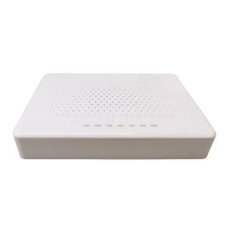
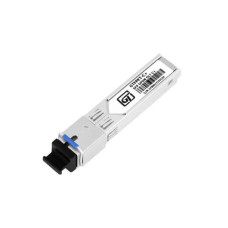
C-Data showroom jashore
C-Data is a networking and fiber-optic communication equipment brand widely associated with FTTH, GPON, EPON, xPON, OLT, ONU, ONT, fiber media conversion, Ethernet networking, and broadband access solutions. Its products are particularly relevant to internet service providers, broadband operators, network installers, enterprise networks, CCTV deployments, and customers building fiber-based internet infrastructure.
For customers in Bangladesh, choosing the right C-Data product requires more than comparing prices. The correct OLT, ONU, ONT, SFP module, media converter, or network device must match the ISP's technology, optical budget, fiber architecture, subscriber requirements, port capacity, management features, and existing network equipment.
C-Data Price in Bangladesh
C-Data prices in Bangladesh vary according to the exact model, port configuration, GPON or EPON technology, optical specification, management features, capacity, warranty, availability, and market conditions. Fiber networking products can also experience frequent price changes, so customers should confirm the latest model, stock, and price before ordering.
| C-Data Product Category | Common Use | Best For | Price Information |
|---|---|---|---|
| C-Data OLT | Fiber access network management | ISPs and broadband operators | Depends on model and port capacity |
| C-Data ONU | Fiber-to-home connectivity | Residential broadband users | Depends on model |
| C-Data ONT | Fiber network termination | FTTH customers and network deployments | Depends on features |
| C-Data EPON Equipment | EPON broadband networks | Compatible ISP infrastructure | Depends on configuration |
| C-Data GPON Equipment | GPON fiber access | Modern FTTH networks | Depends on configuration |
| C-Data xPON ONU/ONT | Flexible PON connectivity | Networks requiring broader compatibility | Depends on model |
| C-Data SFP Module | Optical network connectivity | Switches, OLTs and fiber equipment | Depends on specification |
| C-Data Media Converter | Ethernet-to-fiber conversion | LAN and fiber network installations | Depends on model |
What Is C-Data?
C-Data focuses on broadband access and fiber-optic networking technologies. Its equipment can form different parts of a fiber network, from the central office or ISP side to the subscriber's premises.
In a typical FTTH deployment, an OLT is installed on the network side while an ONU or ONT is installed at the customer's location. Optical fiber carries the connection between them, with passive optical network components used to distribute the signal to multiple subscribers.
Why Choose C-Data for Fiber Networking?
C-Data products can be useful for customers who need dedicated fiber access equipment rather than conventional home networking hardware. The product range allows network operators and installers to select equipment according to subscriber count, PON technology, uplink requirements, optical specifications, and network architecture.
- Suitable products for fiber-based broadband deployments.
- GPON and EPON-oriented networking solutions.
- ONU and ONT options for subscriber connections.
- OLT equipment for centralized fiber access networks.
- Optical networking components for different deployment requirements.
- Products suitable for ISP and FTTH infrastructure.
- Networking equipment for residential, commercial, and specialised deployments.
C-Data OLT in Bangladesh
An Optical Line Terminal, commonly called an OLT, is a central device used in a passive optical network. It communicates with ONUs or ONTs installed at subscriber locations and manages the optical access network.
C-Data OLT products can therefore be relevant to internet service providers and broadband operators building or expanding FTTH networks. The appropriate OLT depends on the required number of PON ports, subscriber capacity, uplink interfaces, supported PON technology, management features, optical budget, and network design.
Who Is a C-Data OLT Best For?
C-Data OLT equipment is primarily relevant to ISPs, local broadband providers, FTTH operators, network contractors, and organisations operating their own fiber access infrastructure. It is generally not a product that a typical home internet customer needs to purchase for personal use.
Before purchasing an OLT, network operators should determine their current subscriber count and expected growth. Selecting a device solely because it has a low purchase price can create limitations when the network expands.
C-Data GPON OLT
GPON is a widely used passive optical networking technology for delivering broadband services over fiber. A C-Data GPON OLT can serve as the central access device in a GPON FTTH deployment when paired with compatible GPON ONUs or ONTs.
When choosing a GPON OLT, customers should verify PON port count, uplink capacity, supported optical modules, management interface, VLAN functionality, authentication options, subscriber capacity, and compatibility with the existing network.
C-Data EPON OLT
EPON is another passive optical networking technology used for fiber-based broadband access. Customers operating an EPON network should select an EPON OLT and compatible EPON subscriber-side equipment.
GPON and EPON should not be treated as interchangeable simply because both use optical fiber. The OLT, ONU or ONT, optical modules, configuration, and network architecture must be compatible with the chosen technology.
C-Data xPON ONU
xPON equipment can be useful where broader PON compatibility is required. Depending on the specific product, an xPON ONU or ONT may support more than one PON technology, which can provide additional flexibility for certain network deployments.
Customers should always verify the exact supported standards of the model rather than assuming that every product labelled xPON supports every possible PON environment.
C-Data ONU in Bangladesh
An ONU, or Optical Network Unit, is commonly installed at the subscriber end of a PON network. It receives the optical signal from the provider's fiber network and provides a usable network connection to the customer's router, computer, switch, or other equipment.
Different C-Data ONU models may provide different Ethernet port configurations, wireless capabilities, voice interfaces, optical characteristics, and management features. The correct choice depends on the service being delivered.
C-Data ONT vs ONU
The terms ONU and ONT are often used interchangeably in everyday networking discussions, although they can describe different types of optical network termination equipment depending on the network architecture and terminology being used.
For customers buying equipment, the more important issue is compatibility with the ISP's OLT and PON technology. Before purchasing an ONU or ONT, confirm whether the ISP uses GPON, EPON, or another supported technology.
Who Needs a C-Data ONU?
A C-Data ONU can be suitable for a customer whose internet provider uses compatible PON technology and permits the customer to use their own optical network device. However, many ISPs configure or supply the ONU themselves.
Customers should therefore ask their ISP for the required PON technology and compatibility requirements before purchasing a replacement ONU. Buying a technically good device that cannot register with the provider's OLT can result in an unusable installation.
C-Data ONU for Home Internet
For a home FTTH connection, an ONU can provide the Ethernet connection needed to connect a Wi-Fi router or computer to the fiber service. Some ONU models may include wireless functionality, while others are designed primarily as optical-to-Ethernet termination devices.
If the ONU does not provide suitable Wi-Fi coverage, customers can connect a separate wireless router. This can be advantageous because a dedicated router may provide stronger wireless features, better coverage, and more configuration options.
C-Data Wi-Fi ONU
A Wi-Fi-enabled C-Data ONU can combine optical termination and wireless networking functions in one device. This can simplify a home installation because a separate router may not be necessary for basic wireless access.
However, customers with large homes, multiple floors, heavy wireless traffic, or advanced networking requirements may still benefit from using a dedicated router or mesh Wi-Fi system.
C-Data OLT Port Capacity
OLT port capacity is an important consideration for ISP networks. A small network may require only a limited number of PON ports, while a growing broadband operator may need a larger chassis or additional OLT capacity.
Customers should consider both current subscribers and expected future expansion. The number of physical PON ports alone does not determine the practical subscriber capacity because optical splitting, bandwidth allocation, service configuration, and device specifications also matter.
How to Choose the Right C-Data OLT
- Identify whether the network uses GPON, EPON, or another PON technology.
- Estimate the current number of subscribers.
- Plan for future subscriber growth.
- Check the number of PON ports.
- Check uplink interface speed and type.
- Verify optical module requirements.
- Check supported ONU and ONT compatibility.
- Review VLAN and service-management features.
- Check remote management capabilities.
- Consider rack or installation requirements.
- Verify power requirements.
- Check warranty and local support availability.
C-Data Optical Fiber Network
A complete fiber network consists of more than an OLT and ONU. Depending on the deployment, it may include optical distribution frames, fiber cables, splitters, patch cords, SFP modules, Ethernet switches, routers, cabinets, power systems, and customer-premises equipment.
Every part of the network should be selected according to the optical budget, required distance, connector type, bandwidth requirements, environmental conditions, and expected subscriber load.
C-Data and FTTH
Fiber to the Home, or FTTH, uses optical fiber to deliver broadband connectivity directly to residential or business premises. C-Data equipment can be used in different parts of such an access network, particularly on the OLT and subscriber termination sides.
FTTH can provide high bandwidth and long-distance transmission, but the final customer experience still depends on the ISP's upstream capacity, network design, optical installation quality, router performance, Wi-Fi coverage, and internet service package.
C-Data for ISP Networks
Internet service providers need equipment that can handle subscriber management, bandwidth allocation, VLAN configuration, authentication, monitoring, and network expansion. The exact requirements depend on the ISP's architecture and service model.
C-Data equipment can be considered as part of an ISP access network when its supported technologies and management capabilities match the operator's existing infrastructure.
C-Data for Small Broadband Providers
Small ISPs and local broadband providers should pay particular attention to scalability. A device that meets today's subscriber requirements may become restrictive as the customer base increases.
Before buying, operators should prepare an expansion plan covering PON port requirements, uplink capacity, optical splitting, subscriber authentication, backup power, rack space, and network management.
C-Data for Enterprise Networks
Businesses requiring fiber connectivity can use optical networking equipment where long-distance links or high-speed backbone connections are needed. However, the appropriate C-Data product depends on whether the requirement is an FTTH-style access network, a point-to-point fiber link, or an Ethernet backbone.
Enterprise customers should identify the actual network topology before choosing equipment. Different architectures require different optical devices and configurations.
C-Data SFP Module
SFP and related optical modules are used to provide fiber connectivity for compatible networking equipment. The correct module must match the device interface, fiber type, wavelength, transmission distance, connector type, and supported data rate.
Customers should never select an SFP module solely because the connector physically fits. Optical compatibility and device support are equally important.
C-Data Media Converter
A media converter can connect Ethernet networking equipment to a fiber-optic link by converting electrical Ethernet signals into optical signals and vice versa. This can be useful when extending a LAN over a longer distance than standard copper Ethernet permits.
Before buying a C-Data media converter, customers should check the required Ethernet speed, fiber type, transmission distance, connector, power supply, and link configuration.
Single-Mode and Multi-Mode Fiber
Fiber type is an important consideration when installing optical networking equipment. Single-mode and multi-mode fiber are designed for different applications and transmission characteristics.
Customers should identify the fiber already installed before purchasing optical modules or media converters. Using the wrong optical specification can prevent a link from operating correctly.
C-Data and Optical Budget
Optical budget describes how much loss a fiber system can tolerate between the optical transmitter and receiver. Fiber length, connectors, splices, splitters, patch panels, and other components contribute to total optical loss.
For PON networks, optical splitting can be particularly significant because each additional split introduces optical loss. Network planners should therefore calculate the complete optical budget instead of judging suitability solely by cable distance.
C-Data GPON vs EPON
| Feature | GPON | EPON |
|---|---|---|
| Technology | Gigabit Passive Optical Network | Ethernet Passive Optical Network |
| Network Environment | Common in broadband FTTH deployments | Common in Ethernet-oriented PON deployments |
| Equipment Matching | Requires compatible GPON OLT and ONU/ONT | Requires compatible EPON OLT and ONU |
| Configuration | Depends on provider architecture | Depends on provider architecture |
| Buying Consideration | Verify GPON compatibility | Verify EPON compatibility |
The correct technology should be determined by the existing network. Customers should not purchase GPON equipment simply because it is newer or more popular if their ISP infrastructure requires EPON.
Common C-Data Buying Mistakes
- Buying an ONU without checking the ISP's PON technology.
- Confusing GPON and EPON compatibility.
- Choosing an OLT without considering subscriber growth.
- Ignoring optical budget calculations.
- Buying an SFP module without checking wavelength and fiber compatibility.
- Ignoring the required Ethernet uplink speed.
- Assuming every xPON device supports every PON standard.
- Choosing equipment solely according to price.
- Ignoring management and VLAN requirements.
- Failing to verify warranty and firmware support.
C-Data for CCTV Fiber Networks
Fiber can be useful for CCTV installations where cameras are located far from the central recording or monitoring location. C-Data-compatible optical networking equipment can form part of a fiber-based surveillance network when the required Ethernet speeds and distances are supported.
For CCTV projects, customers should consider camera bitrate, PoE requirements, switch capacity, fiber distance, uplink bandwidth, and power availability. A media converter alone may not provide PoE, so additional equipment may be required for IP cameras.
C-Data for Long-Distance Networking
Fiber networking can provide a practical way to connect buildings, offices, campuses, warehouses, and other locations over longer distances. The appropriate optical device depends on the required Ethernet speed, fiber type, distance, and network topology.
Customers should avoid assuming that every fiber device supports the same transmission distance. Optical modules are commonly designed for particular distance ranges and wavelengths.
C-Data and Home Router Setup
A common FTTH home configuration uses an optical ONU or ONT connected to a separate Wi-Fi router. The ONU handles the optical connection, while the router manages local devices, wireless networking, NAT, firewall functions, and other home-network features.
This separation can be useful for customers who want better Wi-Fi coverage or more advanced router functionality than the ISP-supplied optical device provides.
How to Troubleshoot a C-Data ONU Connection
If a C-Data ONU or ONT is not providing internet access, customers should first check the physical fiber connection and device indicators. The exact meaning of LEDs varies by model, so the model documentation should be consulted.
- Check that the fiber connector is properly connected.
- Check the optical signal indicator.
- Check the Ethernet cable between the ONU and router.
- Restart the optical device and router if appropriate.
- Check whether the ISP has an outage.
- Confirm that the ONU is registered with the provider's OLT.
- Ask the ISP to verify optical signal and authentication status.
Customers should not repeatedly unplug or bend fiber cables while troubleshooting. Fiber connectors are sensitive and should be handled carefully.
C-Data Maintenance
Fiber networking equipment generally requires less routine maintenance than many mechanical devices, but network operators should still monitor optical levels, device temperatures, power conditions, logs, firmware status, and port utilisation.
Keeping network equipment in a clean, ventilated environment can also help maintain stable operation. Dust and excessive heat can negatively affect electronic equipment over time.
C-Data and UPS Backup
Continuous internet service depends not only on the ISP's network but also on local power availability. OLTs, routers, switches, ONUs, and related equipment can require backup power in locations where uninterrupted connectivity is important.
For ISP infrastructure, backup power planning should consider the total load, required runtime, battery condition, redundancy, and generator or alternative power availability.
How Long Can C-Data Equipment Last?
The useful life of C-Data networking equipment depends on operating temperature, power stability, workload, installation quality, maintenance, firmware support, and technological changes. There is no single fixed lifetime for every product.
Professional network equipment can remain useful for years when installed and maintained correctly. However, an older device may eventually become unsuitable because subscriber demand, bandwidth requirements, management requirements, or network standards have changed.
C-Data Price in Jessore
Customers searching for C-Data products in Jessore may encounter different prices depending on the exact model, stock availability, warranty, supplier, and network specification. Fiber networking equipment is highly model-dependent, so comparing prices without comparing the complete specifications can be misleading.
Unix Network customers in Jessore can discuss their FTTH, broadband, fiber, CCTV, or enterprise networking requirements before selecting C-Data equipment. Customers outside Jessore can also check current product availability and delivery options across Bangladesh.
Buying C-Data Products in Bangladesh
When buying C-Data equipment in Bangladesh, customers should provide the exact network requirement whenever possible. For example, an ISP should specify whether it needs GPON or EPON, the required PON port count, uplink capacity, expected subscriber count, and existing ONU compatibility.
For home customers buying an ONU, the ISP name alone may not be sufficient. Ask the provider which PON technology, ONU type, optical specification, and configuration are required.
What Should You Search for Before Buying C-Data?
- C-Data price in Bangladesh
- C-Data OLT price in Bangladesh
- C-Data ONU price in Bangladesh
- C-Data ONT price in Bangladesh
- C-Data GPON OLT
- C-Data EPON OLT
- C-Data xPON ONU
- C-Data GPON ONU
- C-Data EPON ONU
- C-Data fiber optic equipment
- C-Data OLT price in Jessore
- C-Data ONU price in Jessore
- C-Data networking products in Jashore
Frequently Asked Questions About C-Data
Customers often ask whether C-Data ONU devices work with every ISP. They do not necessarily work with every provider. Compatibility depends on the ISP's OLT, PON technology, authentication method, optical requirements, and configuration policy.
Customers also ask whether a GPON ONU can be used with an EPON OLT. In general, customers should not assume compatibility between the two technologies. The ONU and OLT should be selected as a compatible pair according to the network standard.
Another common question is whether an OLT is required at home. Normally, a home broadband customer does not need an OLT. The OLT is generally part of the provider-side access network, while an ONU or ONT is installed at the customer premises.
Is C-Data Good for FTTH?
C-Data is relevant to FTTH deployments because its product range includes equipment designed for passive optical access networks. Whether a particular model is suitable depends on the ISP architecture, PON technology, subscriber capacity, optical budget, management requirements, and compatibility with existing equipment.
Is C-Data Good for Home Internet?
C-Data can be relevant to home internet when the ISP uses compatible fiber equipment and allows customers to use compatible ONU or ONT hardware. Customers should confirm compatibility with their provider before replacing an existing optical device.
Is C-Data Good for ISP Business?
C-Data equipment can be considered for ISP and broadband infrastructure when the required PON technology, capacity, management features, uplinks, optical specifications, and compatibility requirements are met. Network operators should design the complete network rather than selecting equipment based only on the initial hardware price.
Final Buying Advice for C-Data
C-Data can be a useful choice for fiber-optic networking, FTTH, ISP infrastructure, enterprise connectivity, and related broadband applications. The key to a successful purchase is matching the equipment to the network rather than choosing a model solely because it is inexpensive.
For OLT purchases, identify the PON technology, subscriber count, port requirements, uplink capacity, optical budget, management features, and future expansion needs. For ONU or ONT purchases, first confirm the ISP's technology and compatibility requirements. For SFP modules and media converters, check fiber type, wavelength, distance, connector, and Ethernet speed.
For customers in Jessore and throughout Bangladesh, Unix Network can help compare C-Data and related networking products according to actual network requirements, compatibility, budget, warranty, and current availability. A properly planned fiber network will generally provide much better long-term value than selecting individual devices based only on their advertised speed or price.