
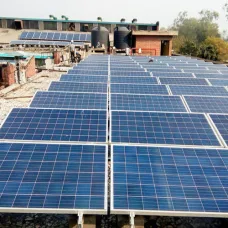
20KW Solar Power System
৳1,200,000
Showing 1 to 2 of 2 (1 Pages)
৳1,200,000
Solar panels are becoming an increasingly practical choice for homes, offices, shops, factories, farms, educational institutions, telecom installations and backup-power projects across Bangladesh. Whether you are planning a small solar setup for essential appliances or a larger rooftop system designed to reduce dependence on grid electricity, choosing the correct panel is more important than simply selecting the highest wattage available. A solar panel converts sunlight into electrical energy, but real-world output depends on panel technology, rated capacity, installation conditions, available roof space, shading, temperature, orientation, inverter compatibility and the quality of the complete solar system. At Unix Network, customers looking for a solar panel price in Bangladesh can compare different capacities and technologies according to their actual requirements rather than buying only on the basis of a low price or large wattage number. Bangladesh has strong potential for solar generation, but local weather, dust, humidity, rooftop conditions and installation quality should all be considered before purchase. For customers in Jessore and throughout Bangladesh, this guide explains how to choose a suitable solar panel, what affects pricing, which panel types are available, what specifications matter, and how to avoid common purchasing mistakes.
The solar panel price in Bangladesh varies considerably depending on wattage, cell technology, manufacturer, panel dimensions, efficiency, construction quality, certification, availability and current import or distribution costs. A small panel intended for a basic lighting system will naturally cost much less than a high-capacity module designed for a commercial rooftop installation. Similarly, a modern high-efficiency panel can have a higher purchase price but may produce more electricity from the same roof area, which can make it more attractive where installation space is limited.
Customers should also remember that the panel itself is only one part of a solar power system. A complete installation may require a solar inverter, charge controller, battery, mounting structure, DC cables, connectors, protection devices, earthing equipment, monitoring equipment and professional installation. Therefore, comparing only the price of one solar panel can give an incomplete picture of the actual investment.
Bangladesh's approved solar-module ecosystem also includes a wide range of capacities and manufacturers. The Sustainable and Renewable Energy Development Authority (SREDA) maintains an approved solar-module list for net-metering applications, with models from several international and regional manufacturers. The published list includes modules ranging from older lower-capacity designs to modern modules exceeding 600 Wp, showing how quickly panel technology has evolved.
Because solar-panel prices can change with exchange rates, shipment costs, stock availability and market conditions, customers should confirm the current model, warranty and price before ordering. Unix Network can help customers identify an appropriate panel based on system size, available space, expected load and budget instead of recommending a product solely because it has a higher wattage rating.
A solar panel, also called a photovoltaic or PV module, is an electrical device that converts sunlight into direct-current electricity. Multiple solar cells are connected together inside a protected module to provide a practical voltage and power output. The electricity produced by the panel can be used directly by compatible DC equipment, stored in batteries through a suitable charge controller, or converted into alternating current through a solar inverter for conventional household, office or industrial appliances.
A typical modern module contains photovoltaic cells, glass, encapsulation material, a protective backsheet or rear glass, an aluminium frame and a junction box. The quality of these components influences how well the panel withstands heat, moisture, mechanical stress and long-term outdoor exposure. A good solar installation therefore requires attention to both electrical specifications and physical construction.
The wattage printed on a panel represents its rated maximum power under specified test conditions. It does not mean that the panel will continuously produce exactly that amount of electricity throughout the day. Sunlight intensity changes from morning to afternoon, clouds reduce irradiance, temperature affects output, and dirt or shading can further reduce production. This is why system planning should consider expected real-world energy generation rather than relying only on the number printed on the product label.
Solar energy can be particularly useful in Bangladesh because electricity requirements are growing across residential, commercial, agricultural and industrial applications while sunlight is available for much of the year. Solar systems can help supply electricity in locations where grid access is limited, support backup systems, reduce daytime grid consumption and provide an alternative energy source for selected loads.
Rooftop solar is especially interesting for buildings with unused roof space. Instead of requiring additional land, a rooftop installation can make use of an existing structure. Commercial and industrial customers may also consider grid-connected solar and net metering where the applicable utility and regulatory requirements are satisfied. SREDA's rooftop solar guidance describes systems in which solar modules produce DC electricity, an inverter converts it to AC, electricity serves the building's requirements and surplus generation can be exported to the grid under applicable arrangements.
Solar panels are available in several technologies and physical configurations. For most customers, the most important distinction is between monocrystalline and other crystalline-silicon designs, while newer high-efficiency cell architectures can further improve performance. Choosing the right type depends on available space, budget, energy requirements and the intended solar system.
Monocrystalline solar panels are among the most widely considered options for modern residential and commercial solar systems. They are manufactured using silicon-based cells with a monocrystalline structure and are generally associated with high efficiency and good power density. Their ability to deliver relatively high output from a given panel area makes them particularly useful where rooftop space is limited.
For a Bangladesh homeowner with a relatively small roof but a meaningful electricity requirement, a higher-efficiency monocrystalline module can be attractive because the customer may obtain more installed capacity without covering as much additional roof area. However, panel efficiency alone should not determine the purchase. The physical dimensions, electrical characteristics, inverter compatibility, warranty and installation conditions remain important.
Polycrystalline panels use a different silicon manufacturing process and were historically popular because they offered a balance between manufacturing cost and performance. Modern installations increasingly include newer high-efficiency technologies, but polycrystalline modules can still appear in existing systems, budget-oriented projects and replacement requirements.
If you are replacing an older panel, compatibility can be more important than choosing the newest available technology. Voltage, current, physical dimensions, mounting arrangement and the characteristics of the existing charge controller or inverter should be checked before purchasing a replacement.
Bifacial solar panels can generate electricity from light reaching both the front and rear sides of the module. Their practical benefit depends heavily on installation conditions. A bifacial panel installed where the rear surface receives little reflected or indirect light may not provide the same benefit as one installed above a suitable reflective surface with adequate rear-side exposure.
This makes installation design especially important. Customers should not assume that every bifacial module will automatically produce substantially more electricity than a conventional panel. Roof material, mounting height, spacing, surface reflectivity and shading all influence the potential advantage.
TOPCon is a modern crystalline-silicon cell technology designed to improve efficiency and electrical performance compared with many older conventional cell architectures. TOPCon modules are increasingly available in higher-power formats and can be attractive for customers who want greater power generation from limited installation space.
For a new rooftop system, TOPCon may be worth considering when the price difference is justified by the expected energy output and the available roof area. The best choice should still be based on the complete module specification, warranty, manufacturer reliability, inverter compatibility and installation environment rather than the technology name alone.
Half-cut cell technology divides conventional solar cells into smaller sections. This design can reduce certain electrical losses and improve the way the panel behaves under some operating conditions. Many modern high-output modules use half-cut cell architectures as part of their overall design.
Half-cut construction can be useful in installations where partial shading is possible, although the actual result depends on the module's internal circuit design and the location and severity of the shade. A customer should therefore avoid assuming that half-cut cells make a panel completely immune to shading.
Flexible solar panels are designed for situations where conventional rigid framed modules are inconvenient. They can be useful for certain mobile, marine, camping, lightweight or curved-surface applications. Their lighter construction can make them easier to transport and install in specialised projects.
Flexible modules should not automatically be considered a better alternative for a standard residential rooftop. A conventional framed panel may provide stronger mechanical protection and a more established mounting approach for long-term fixed installations. Flexible panels are most useful when their physical characteristics solve a specific installation problem.
Portable solar panels are designed for mobility rather than permanent rooftop installation. They can be useful for camping, outdoor equipment, emergency charging, temporary field work and selected low-power applications. Depending on the model, they may work with portable power stations or dedicated battery systems.
Customers should check connector type, operating voltage, rated power and compatibility with their portable power station before buying. A panel that appears to have sufficient wattage may still be unsuitable if its voltage or connector arrangement does not match the receiving device.
Modern solar modules are increasingly available at high power ratings. SREDA's current approved-module records include multiple models in the 600 Wp and higher range, including examples around 630 Wp, 635 Wp, 640 Wp, 695 Wp, 705 Wp and 720 Wp.
High-wattage modules can reduce the number of panels required to reach a particular system capacity. This can simplify some installations and reduce the number of individual panel positions, although larger modules can also be heavier and physically bigger. Roof structure, transportation, installation access and mounting compatibility therefore need to be considered.
Small solar panels are useful for low-power applications such as basic lighting, small battery charging systems, sensors, educational projects, portable equipment and selected DC loads. They can be a practical way to begin with solar power without installing a large system.
The correct small panel should be selected according to the battery voltage, expected energy consumption and charge-controller requirements. A 12V-labelled solar system, for example, still requires appropriate charging equipment and should not be connected directly to a battery without confirming that the system is designed for such operation.
Wattage is one of the first specifications customers notice when searching for a solar panel. A panel rated at a higher wattage can generally deliver more peak power under its rated test conditions. However, two panels with different technologies can have different physical sizes and efficiencies, so wattage should always be considered alongside dimensions and efficiency.
For example, customers planning a 5 kW rooftop system should not simply divide 5,000 W by an assumed panel wattage and immediately place an order. The system designer also needs to consider inverter operating voltage, maximum input current, string configuration, roof layout, shading, orientation and local installation conditions.
Performance should be evaluated from several angles rather than from peak wattage alone. A quality solar panel should have a well-documented electrical specification, consistent manufacturing quality and a design appropriate for long-term outdoor use. Customers should look at rated power, efficiency, voltage, current, temperature coefficients, degradation information and applicable certifications where relevant.
Real-world performance is also strongly affected by installation. A high-quality panel installed under heavy shade may produce less energy than a lower-rated panel placed in an unobstructed location. Dust, bird droppings and other surface contamination can also reduce sunlight reaching the cells. In Bangladesh, where dust and humid weather can affect outdoor equipment, regular inspection and cleaning can be useful.
Panel efficiency describes how effectively the module converts available sunlight into electrical power under specified test conditions. Higher efficiency can be particularly valuable where rooftop space is limited. If two panels occupy approximately similar areas but one produces more rated power, the higher-power design may provide greater installed capacity from the same roof footprint.
Efficiency should not, however, become the only buying criterion. A panel with slightly lower efficiency but a better price, stronger warranty, suitable dimensions and good availability may be the more practical choice for a large roof. Good purchasing decisions balance efficiency, reliability, system compatibility and total project cost.
Build quality is extremely important because solar panels remain outdoors for many years. The module must tolerate sunlight, temperature changes, rain, humidity, wind and mechanical stress. Glass quality, frame construction, encapsulation, junction-box design, connectors and manufacturing consistency all contribute to long-term reliability.
When buying a panel, customers should inspect the product label, model number, packaging, physical condition and warranty documentation. A suspiciously cheap panel with unclear origin can create more expense later if it suffers premature failure or cannot be supported by the seller.
Compatibility is one of the most commonly overlooked areas when customers buy solar panels. A panel cannot be evaluated independently from the rest of the solar system. The voltage and current characteristics must work within the operating limits of the selected inverter, charge controller or other power electronics.
For a new installation, the inverter should be selected together with the intended solar module configuration. For an existing system, the replacement panel should be compared with the electrical characteristics of the original module. Mixing panels with significantly different voltage and current characteristics in the same string can create inefficient or unsuitable operating conditions.
Solar panels do not normally provide internet connectivity themselves. In a complete solar system, however, connectivity can be provided through the inverter, monitoring gateway or dedicated monitoring system. Customers may then be able to view generation information, system status and fault notifications depending on the equipment used.
For commercial systems, monitoring can become particularly useful because it helps identify underperforming strings, inverter faults or unusual production patterns. When purchasing a solar system, customers should ask whether the inverter supports Wi-Fi, Ethernet, mobile-app monitoring or another communication method if remote monitoring is important to them.
Solar efficiency is only one part of the total energy-yield equation. The complete system includes the panel, inverter, cables, connectors, battery where applicable and installation environment. Energy can be lost through electrical resistance, inverter conversion, shading, dust and temperature effects.
Customers should therefore focus on expected daily and annual energy generation rather than assuming that the panel's rated wattage equals daily electricity production. A solar professional can estimate generation using installed capacity, local solar conditions, orientation, tilt, shading and system losses.
For a home solar system, the first step should be identifying what you actually want the solar installation to accomplish. Some households want backup power during outages, while others want to reduce daytime electricity consumption. These goals can require different system designs.
If the objective is backup power, battery capacity and inverter selection are particularly important. If the objective is daytime energy generation, panel capacity and inverter efficiency become major considerations. A hybrid system may combine grid electricity, solar generation and battery storage, while an off-grid system needs sufficient generation and storage to operate without the utility grid.
Offices and retail shops often consume a meaningful amount of electricity during daylight hours, making rooftop solar particularly relevant. Computers, networking equipment, lighting, fans, air-conditioning systems and other daytime loads can potentially benefit from solar generation.
For businesses, the financial calculation should include system capacity, expected daytime consumption, available roof area, installation cost, maintenance requirements and applicable grid or net-metering arrangements. Businesses should avoid sizing the system purely from the monthly electricity bill without understanding when electricity is actually being consumed.
Large commercial and industrial rooftops can provide substantial installation space. Such projects require more careful engineering because the number of modules, inverter capacity, cable lengths, structural loads and protection requirements increase with system size.
For large installations, customers should request a proper system design rather than selecting panels individually. Module selection should be coordinated with inverter string design, roof layout, cable routing, earthing, surge protection and maintenance access. For applicable grid-connected projects, regulatory and utility requirements should also be checked before installation.
Solar power can support agricultural applications such as irrigation, water pumping, lighting and remote equipment. The panel selection for a pump system differs from that of a small household backup system because motor starting characteristics, pump power, operating hours and water requirements need to be considered.
A solar water-pumping project should therefore be designed around the pump and required water output rather than selecting panels first. A properly matched solar pump inverter or controller can be important for reliable operation.
Solar panels can be particularly valuable where reliable grid electricity is unavailable or difficult to access. An off-grid installation can provide electricity for lighting, communication equipment, fans, small appliances and other essential loads.
Battery storage becomes a major part of an off-grid system because electricity must often be available after sunset. Customers should calculate both daily energy consumption and peak load. A system may have enough solar-panel capacity to generate energy during the day but still fail to meet evening requirements if the battery is undersized.
Remote networking and telecommunications installations may use solar power where extending conventional electricity infrastructure is difficult. Such systems require careful consideration of continuous load, battery autonomy, environmental conditions and remote monitoring.
Because telecom equipment can operate continuously, system sizing should account for 24-hour energy requirements rather than only daytime consumption. Solar panels, batteries, charge controllers, DC distribution and protection equipment should be selected as one integrated system.
Warranty is an important consideration when buying a solar panel because it is a long-term outdoor product. Customers should distinguish between product or workmanship warranty and performance warranty. They do not necessarily cover the same issues.
A product warranty generally relates to defects in materials or workmanship, while a performance warranty relates to expected electrical output degradation over time under specified conditions. Exact warranty periods and conditions vary by manufacturer and model, so customers should read the actual warranty documentation rather than relying on informal statements such as “long lifetime”.
Solar panels are designed as long-term outdoor equipment, but their output can gradually decline over time. This is commonly described as degradation. The exact degradation rate depends on the module technology, manufacturing quality, environmental exposure and manufacturer specifications.
Customers should therefore compare the manufacturer's stated long-term performance information when selecting a panel for a major installation. A slightly higher initial price may be reasonable if the module offers stronger documented performance and warranty support, particularly when replacement or access to the rooftop would be expensive.
Brand reputation matters because solar panels are intended for long-term use and can be difficult to replace after installation. Established manufacturers with documented product specifications, recognised testing and accessible warranty channels can reduce purchasing uncertainty.
Bangladesh's SREDA approved-module records demonstrate that multiple manufacturers and model families are available for relevant applications. Current records include brands such as Jinko Solar, LONGi, JA Solar, Trina Solar, Astronergy, AE Solar, Canadian Solar and others, alongside local or regional names. Customers should verify the exact model and its approval status where net metering is relevant rather than assuming that every product from a particular brand is automatically approved.
The correct panel depends on the project rather than one universal specification. Start by identifying the purpose of the solar system, the available installation area and the expected electrical load. Then compare suitable module capacities and technologies.
Roof space should be measured before ordering panels. High-wattage panels can reduce the number of modules required, but they may be physically larger. Customers should leave adequate space for mounting structures, maintenance access and safe cable routing.
Shading should also be evaluated throughout the day. A rooftop that looks sunny at noon may experience significant shade in the morning or afternoon. Nearby buildings, water tanks, parapet walls, trees and antennas can all affect generation. A professional site survey can provide a more reliable basis for panel placement.
Installation direction and tilt influence solar energy production. The best arrangement depends on the geographic location, roof design and system objective. Panels should generally be positioned to receive as much unobstructed sunlight as practical while remaining mechanically secure.
Improper installation can create problems even when the panel itself is high quality. Weak mounting structures, poor cable management, inadequate drainage, incorrect connectors or unsuitable roof penetration can cause safety and maintenance issues. For this reason, customers should treat the installation system as part of the product investment rather than an afterthought.
Shading is one of the most important factors affecting solar generation. Even partial shade over a portion of a module or string can influence electrical output. The effect depends on the module's internal design, bypass diodes, string configuration and inverter architecture.
Solar panels generally require less maintenance than many mechanical power systems, but they are not maintenance-free. Dust, dirt, leaves, bird droppings and other contamination can reduce the amount of sunlight reaching the cells. The required cleaning frequency depends on the local environment and the panel's installation angle.
Cleaning should be performed carefully without damaging the glass or frame. Customers should follow the manufacturer's recommendations and avoid unsafe rooftop access. During maintenance, it is also sensible to inspect visible cables, connectors, mounting hardware and signs of water ingress or physical damage.
Solar panels generate electricity whenever sufficient light reaches them. This means a PV array should be treated as an electrical energy source even when the grid is disconnected. DC electricity can create dangerous arcing if connectors are incorrectly installed or disconnected under unsuitable conditions.
Permanent solar installations should therefore include appropriate DC isolation, overcurrent protection where required, surge protection, earthing and properly rated cables and connectors. Installation should be performed by suitably qualified personnel who understand both solar DC systems and the applicable electrical safety requirements.
The inverter is one of the most important components to match with the panel. The inverter's maximum PV voltage, maximum current, MPPT operating range and permitted string configuration must all be compatible with the chosen module arrangement.
For example, connecting several panels in series increases system voltage, while connecting strings in parallel increases available current. The resulting electrical characteristics must remain within the inverter's operating limits. This is why customers should not design a multi-panel system by simply connecting panels together without checking the inverter documentation.
In an off-grid or hybrid system, the solar panels and battery are connected through appropriate power electronics. The battery voltage, capacity, chemistry and charging requirements must be compatible with the charge controller or hybrid inverter.
A larger panel array does not automatically mean that a larger battery is required in every application, but the relationship between generation, load and storage must be planned. Customers who require electricity during long grid outages should pay particular attention to battery capacity and expected backup duration.
Customers interested in net metering should verify the applicable current requirements before purchasing equipment. SREDA maintains an approved-module list for net-metering applications, and its records identify specific brands, model numbers, capacities and applicable standards. Therefore, the exact model can matter rather than simply the brand name.
A grid-connected system also requires a compatible inverter and appropriate utility arrangements. Customers should not assume that buying an approved solar panel alone makes an entire installation eligible for net metering. The complete system and application process must satisfy the relevant requirements.
Solar-module standards provide useful information about testing and product suitability. SREDA's published approved-module records reference standards including IEC 61215 and IEC 61730, with newer entries also referencing BDS IEC versions. These standards relate to important aspects of photovoltaic module design, performance and safety.
Customers should check the exact documentation for the model they are buying. Certification claims should be associated with the actual product model rather than treated as a general statement about an entire brand.
Several factors influence the final retail price of a solar panel in Bangladesh. The first is rated capacity. Higher-capacity modules generally require more materials and can command a higher price. Cell technology is another major factor, as modern high-efficiency designs can cost more than older technologies.
Manufacturer reputation, availability, import costs, distributor margins, packaging, transportation and exchange-rate movements can also affect pricing. Large-format panels may have different logistics costs because of their size and weight. Market demand and stock availability can cause prices to change over time.
Solar panels are long-term equipment, so initial purchase price should be considered alongside expected energy production, warranty, reliability and installation cost. A very cheap product may look attractive initially but become poor value if its output is lower than expected or support is difficult to obtain.
At the same time, customers should not assume that the most expensive panel is automatically the best. The correct approach is to compare documented specifications and total project value. For a large rooftop, a moderately priced high-efficiency panel may provide excellent value; for a simple low-power project, an economical panel may be entirely adequate.
New panels are normally preferable for a new long-term installation because the customer receives known specifications, clearer warranty coverage and a predictable product history. Used panels can sometimes be suitable for temporary projects, experimental systems or budget installations, but their condition and remaining performance can be difficult to determine.
When considering used modules, inspect the glass, frame, junction box, connectors, labels and visible cell condition. Ask about the panel's age, previous operating environment and reason for replacement. A used module without reliable documentation should not be treated as equivalent to a new module simply because its wattage label looks similar.
Before placing an order, customers should collect a few basic details about the intended project. Knowing the required system capacity, roof dimensions, inverter model and application makes it much easier to identify an appropriate panel.
Customers researching solar products online may use different search terms depending on whether they are looking for information, a particular model or a local seller. Useful searches include “solar panel price in Bangladesh”, “solar panel price in Jessore”, “solar panel shop in Jessore”, “solar panel online Bangladesh”, “buy solar panel in Bangladesh”, “monocrystalline solar panel price Bangladesh”, “high watt solar panel Bangladesh”, “600W solar panel price Bangladesh” and “solar panel for home Bangladesh”.
However, search results should be used as a starting point rather than the final basis for purchase. Product stock, model number, warranty and pricing can change. Always verify the exact product before making a purchase.
If you want to Buy solar panel in Bangladesh, consider both online convenience and local technical support. Online purchasing can make it easier to compare models, capacities and prices, while a physical showroom can be useful when customers want to discuss their requirements before selecting equipment.
Unix Network serves customers looking for computer, networking, power and technology products in Bangladesh, with a showroom presence in Jessore. Customers can contact the business to discuss suitable solar-panel options, availability and current pricing. For larger solar projects, it is advisable to provide the intended system capacity and inverter information so that product compatibility can be assessed before purchase.
Customers searching for a solar panel shop in Jessore can consider Unix Network for product enquiries and technical guidance. A local showroom can be useful for customers who prefer discussing requirements in person, particularly when they are unsure about panel capacity, system compatibility or the difference between panel technologies.
Customers from Jashore and surrounding areas can enquire about current stock and available models before visiting. Because solar-panel inventory can change quickly, confirming availability in advance is recommended.
For customers searching for solar panel online Bangladesh, online product information should make the purchasing decision easier rather than simply displaying a price. A useful product listing should clearly identify the manufacturer, model, rated power, technology, dimensions, warranty and relevant electrical characteristics.
When ordering online, customers should also consider transportation because solar modules are large and fragile compared with many ordinary electronics products. Packaging, handling and delivery arrangements are important, particularly for high-wattage glass-fronted modules.
Unix Network focuses on helping customers select technology products according to practical requirements. For solar-panel purchases, this means customers should receive more than a price quotation. Understanding the intended application, inverter compatibility, system capacity and available space can prevent expensive mistakes.
Authenticity is particularly important for solar panels because the product is expected to operate outdoors for many years. Customers should verify the exact manufacturer, model and documentation rather than buying an unidentified module based only on a wattage label.
Unix Network aims to provide customers with genuine technology products and practical purchasing guidance. Customers should retain their invoice and warranty documentation after purchase, as these records can be important if support is required later.
Competitive pricing does not necessarily mean offering the cheapest product regardless of quality. A sensible price should be considered together with panel technology, efficiency, manufacturer reputation, warranty, availability and suitability for the customer's system.
If two panels appear similar but one has stronger documentation, better efficiency or more appropriate electrical characteristics, the slightly higher-priced option may provide better long-term value. Unix Network can help customers compare available choices according to their budget and intended application.
Customers who are unfamiliar with solar technology can easily become confused by terms such as Wp, Voc, Vmp, Isc, Imp, efficiency, MPPT, bifacial, TOPCon and degradation rate. Understanding every technical term is not necessary, but knowing which specifications affect your system is important.
Unix Network can help customers understand the practical differences between available options and identify the information that should be checked before purchase. For larger installations, professional solar-system design remains recommended.
Solar panels require careful transportation because they are large, rigid and generally use glass surfaces. Delivery arrangements should take account of product dimensions and packaging. Unix Network can serve customers beyond Jessore, with nationwide delivery options subject to product availability and delivery conditions.
Warranty support is particularly valuable for products intended for long-term use. Customers should keep invoices, model information and warranty documents in a safe place. If a problem occurs, providing the exact model and purchase information can make the support process easier.
Unix Network is a member of the Bangladesh Computer Samity (BCS). Membership in an established industry organisation can provide useful context when customers are evaluating a technology retailer, although customers should still verify the exact product, warranty and purchase terms for every transaction.
Unix Network has a showroom in Jessore, making it convenient for customers in Jashore and nearby areas who prefer local assistance. Customers can enquire about available solar-panel models, current prices and product suitability before making a purchase.
Customers throughout Bangladesh can enquire about solar-panel availability and delivery. Before ordering, it is useful to confirm the product's exact model, packaging, delivery arrangements, warranty and return conditions, particularly for large modules.
Different customers need different solar solutions. A student working on an educational project does not require the same panel as a factory owner planning a large rooftop installation. Similarly, a rural household requiring lighting backup has different requirements from a commercial building interested in grid-connected solar.
A good solar project begins with load analysis. Make a list of the appliances or equipment that need to run from solar power and note their wattage and expected operating hours. This produces a more useful estimate of daily energy demand.
Next, determine whether the system should be grid-connected, off-grid or hybrid. A grid-connected system may prioritise daytime generation and applicable net-metering arrangements. An off-grid system needs enough storage and generation to operate independently. A hybrid system combines multiple energy sources and can provide additional flexibility.
The solar panel price in Bangladesh depends on wattage, technology, brand, efficiency, dimensions, availability, warranty and market conditions. Small panels can cost much less than modern high-capacity modules. Prices also change over time, so customers should confirm the current price and exact model before ordering.
There is no single panel that is best for every home. A modern monocrystalline or high-efficiency module can be a practical choice for many rooftop installations, particularly where roof space is limited. The final choice should be based on required system capacity, roof area, shading, inverter compatibility, budget and warranty.
High-wattage panels can be useful because fewer modules may be required to reach a particular system capacity. However, they can also be physically larger and heavier. Before buying, check roof space, mounting compatibility, inverter limits, transportation and installation requirements.
Both are based on crystalline silicon but use different cell manufacturing approaches. Monocrystalline modules are generally associated with higher efficiency and are widely used in modern installations. Polycrystalline panels are an older and often more economical technology. For a new installation, customers should compare actual specifications, price, warranty and availability rather than choosing solely by technology name.
Bifacial panels can provide additional energy from light reaching the rear side of the module, but their advantage depends on installation conditions. Rear-side exposure, mounting height, spacing and surface reflectivity all matter. They are not automatically better in every rooftop situation.
Solar panels are designed for long-term outdoor operation, but their electrical output gradually decreases over time. The expected performance and degradation rate vary by manufacturer and model. Customers should review the manufacturer's product and performance warranty rather than relying on a generic lifetime claim.
No. The panel and inverter must be electrically compatible. The inverter's maximum PV voltage, current limits, MPPT operating range and string configuration must be checked against the selected panel arrangement. Professional system design is recommended for multi-panel installations.
Solar panels can still generate electricity when there is daylight on cloudy days, but output is normally lower than under strong direct sunlight. The amount of reduction depends on cloud thickness and the actual light available. Customers should therefore avoid calculating system capacity based only on ideal sunny conditions.
They may need periodic cleaning because dust, dirt, leaves and bird droppings can reduce sunlight reaching the cells. Cleaning frequency depends on the installation environment. Safe cleaning practices should be followed, especially on rooftops.
Yes, customers can research and purchase solar panels online, but they should verify the exact model, wattage, dimensions, electrical characteristics, warranty and delivery arrangements before ordering. For large modules, transportation and packaging are particularly important.
Customers looking for a solar panel shop in Jessore can contact Unix Network to enquire about available products, current pricing and purchasing guidance. Customers should confirm stock before visiting because solar inventory and models can change.
Yes. Solar panels can charge batteries through a suitable solar charge controller or compatible hybrid inverter. The panel array, controller or inverter and battery must be designed to work together. Battery voltage, capacity, charging requirements and expected backup duration should all be considered.
Solar panels can be part of net-metered rooftop systems where the applicable requirements are met. SREDA publishes an approved solar-module list containing specific models and technical standards. Customers should verify the exact module and complete system requirements before proceeding with a net-metering project.
Check the exact model number, rated power, efficiency, voltage, current, dimensions, weight, warranty, manufacturer, certification information where applicable and compatibility with your inverter or charge controller. Also consider shading, roof space, mounting requirements and the total cost of the complete solar system.
No. Price should be evaluated against efficiency, reliability, warranty, manufacturer reputation, system compatibility and expected long-term value. The most expensive panel may be unnecessary for a small project, while an extremely cheap unidentified panel may create avoidable risks.
Choosing a solar panel should be treated as a long-term technology investment rather than a simple price comparison. The ideal product is the one that matches the required power capacity, available installation space, inverter or battery system, environmental conditions and budget while providing appropriate warranty and product support. Customers should compare the exact model number and documented specifications, especially when evaluating high-wattage or newer-generation modules.
For customers searching for solar panel price in Bangladesh, Buy solar panel in Bangladesh, solar panel online Bangladesh or a solar panel shop in Jessore, Unix Network provides a local purchasing option with a Jessore showroom and nationwide customer reach. Customers can enquire about genuine products, current availability, competitive pricing and compatibility before making a purchase. For larger rooftop, industrial, agricultural or net-metering projects, providing the complete system requirements will make product selection more accurate.
Unix Network, also known as ইউনিক্স নেটওয়ার্ক, is committed to helping Bangladeshi customers make informed technology purchases. With genuine products, competitive prices, expert advice, warranty support, fast delivery, a Jessore showroom, BCS membership and nationwide delivery options, Unix Network can be a practical place to start when comparing solar panels and related technology products. Contact Unix Network at 01715143685 to confirm current solar panel availability, pricing and product suitability before ordering.
